How to Use LinkedIn in 2026
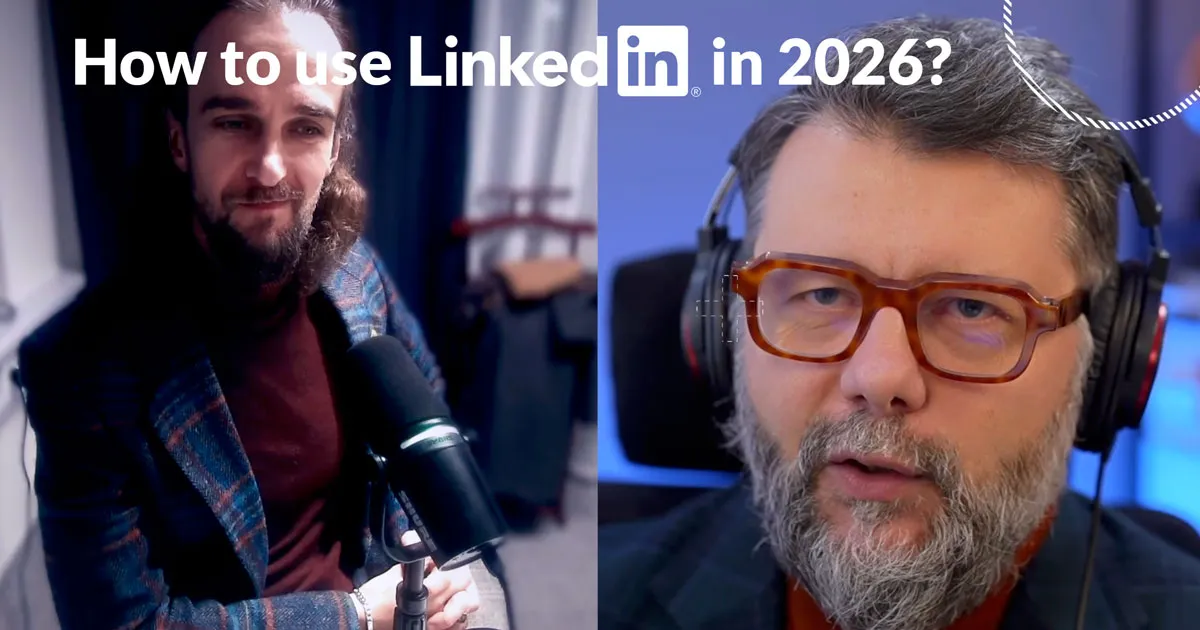
I summarized an hour-long podcast about LinkedIn in 2026 to which Artur Jabłoński invited me.

Rafal Szymanski
I implement LinkedIn and Sales Navigator in B2B companies.
What LinkedIn topics did we discuss in the podcast?
Key LinkedIn takeaways to remember
LinkedIn in 2026: The end of “likes”, mobile first, and why AI won’t save your posts. The new LinkedIn algorithm BREW360 checks whether your profile is consistent with what you write and matches you to the right groups.
Is LinkedIn in 2026 even usable anymore?
That’s the first question I heard from Artur Jabłoński. The context is brutal: we laugh at the “boomer” nature of this platform, at “CringeIn” and success propaganda. Then there’s artificial intelligence. We have the impression that bots write posts and other bots comment on them.
Is it still worth being here? Yes. But only if you stop “doing LinkedIn” as if it were 2020.
Here are the key takeaways from our conversation – no sugarcoating.
1. LinkedIn on desktop is the past. We rule with our thumbs
Most of us create content at desks, on large monitors. I’m also a victim of this habit. Meanwhile, the statistics are relentless: 70% of LinkedIn traffic now comes from mobile devices. Optimize your content and activities for this.
What does this mean in practice? If your designer creates a beautiful carousel on a 32-inch monitor, or you post a wall of text without paragraphs – it’s a waste of time and effort. On a phone, it’s unreadable.
- What works: Vertical video, readable carousels (yes, the ones you scroll with your thumb), and formats adapted for small screens
- What doesn’t work: Horizontal video and graphics with microscopic text.
2. End of Wikipedia-style knowledge and AI-Slop on LinkedIn. Time for failures
We’re drowning in content. Last year, the amount of content tripled while reach dropped by half. Why? Generating a post about “what is marketing” takes AI three seconds. If you don’t respect yourself and your readers, you’ll publish it in another 5 seconds, right after generating an AI graphic. That’s why no one wants to read dry definitions anymore. I call this the “wikipediazation” of content – and it’s a dead end.
What can’t AI fake? Your insights and your failures. Instead of writing “we ran a great campaign,” write: “we had this plan, this didn’t work out, this is where things went wrong, and these are the conclusions we drew.” This builds trust. This is authentic.
It was said as a joke, but I seriously believe: talk about your failures, and you’ll never run out of content.
3. Likes are good for your ego and only important for that. What matters is “Dark Social”
You see few likes and think the post “didn’t land”? Wrong. In 2026, we have new success metrics. The algorithm looks at what’s not publicly visible – the so-called Dark Social.
Two metrics are key (available in the new analytics):
- Saving the post (for later).
- Sending the post (in a private message).
These are the strongest signals for the algorithm that your content is valuable. Create materials that people want to return to, not just “scroll past.”
4. Sales and lead generation on LinkedIn: Don’t be a bot
Today, when you open your inbox, you see 15 messages generated by automation offering a “non-binding invitation to a Teams meeting.” The effectiveness of such activities is dropping drastically. Conversion from invitations used to be 50-60%, now 30% is a good result. And although I produce automation software myself, I repeat: don’t be a bot, there’s a human on the other side who wants to be treated like a human, not a record to check off in your CRM.
How to break through?
- Do your homework: Check if the company even has a budget (e.g., are they laying off or hiring). You have the LeadIQ function in LinkedIn Sales Navigator for this.
- Warm up the contact: Comment substantively on the person’s posts before sending an invitation.
- Be human: My strangest method? A message in the invitation that says: “I’m not a bot” or “I won’t try to spam you with a meeting invitation.” This worked because it breaks the pattern.
5. LinkedIn Algorithm Brew360 and “tribes”
LinkedIn has started closing us into information bubbles it calls “tribes.” The algorithm no longer just looks for keywords but checks whether your content resonates with a specific group of people.
Interestingly, the new version of the algorithm called Brew360 stopped promoting only the newest content. Now relevance matters. You might see a post from 3 weeks ago in your feed if the system considers it important to you.
LinkedIn tools – what do I recommend?
Artur tried to extract “one magic tool” from me, but it ended with several. If you want to act professionally:
Sales Navigator: Absolute foundation for sales. Allows you to clear your feed of ads and focus on decision-makers
LinkedIn Sales NavigatorShield LinkedIn Analytics: External analytics, because I love working with data.
Shield LinkedIn AnalyticsAuthoredUp: Helps format posts to look good on mobile. Also has analytics.
AuthoredUpSummary
LinkedIn in 2026 is not a place to copy strategies from Instagram or post corporate platitudes. It’s a place for experts who can combine data with a human face.
For the curious, here’s the full conversation with Artur Jabłoński
And you? Which of these changes surprised you the most this year? Let me know in the comments on LinkedIn (just please, don’t let AI write it for you).
Maybe we can do something together?
If you like what I write, maybe I can write something for you?