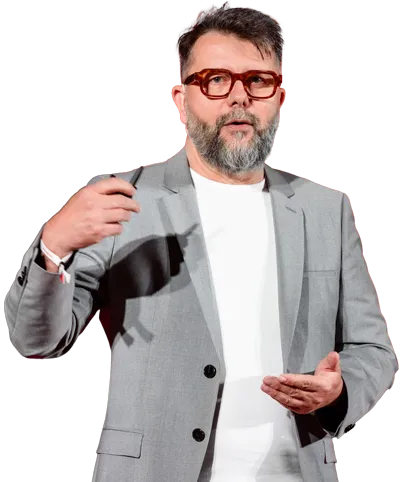
"Nic nie czuję" (I Feel Nothing): a Film About Child Psychiatry in Which I Appear as a Parent
"Nic nie czuję" ("I Feel Nothing") is a documentary by Anita Bugajska and Janusz Schwertner about four young people who were patients of psychiatric hospitals as children, and about their parents. I appear in it as one of the parents. Here is what it shows about children's wards, about parents at work and about how we started talking again.

Rafal Szymanski
Activist for the mental health and rights of children and young people
I have been working on the mental health and rights of children and teenagers since 2015, when my child was admitted to a psychiatric hospital. I ran "Porcelanowe Aniołki", a blog about depression in teenagers, gave the TEDx talk "Depression is the kidnapper of our children" and appeared in the documentary "Nic nie czuję" (I Feel Nothing). Since 2022 I have been an "expert by experience" on the Expert Commission for Mental Health Protection at Poland's Commissioner for Human Rights, an expert on the children and youth participation team of Poland's Ombudsman for Children and UNICEF, and an ambassador of the UNAWEZA Foundation's "Młode Głowy" (Young Minds) program. More about this work is on the Social activities page. My day job is something completely different: I train companies in LinkedIn.
Published On
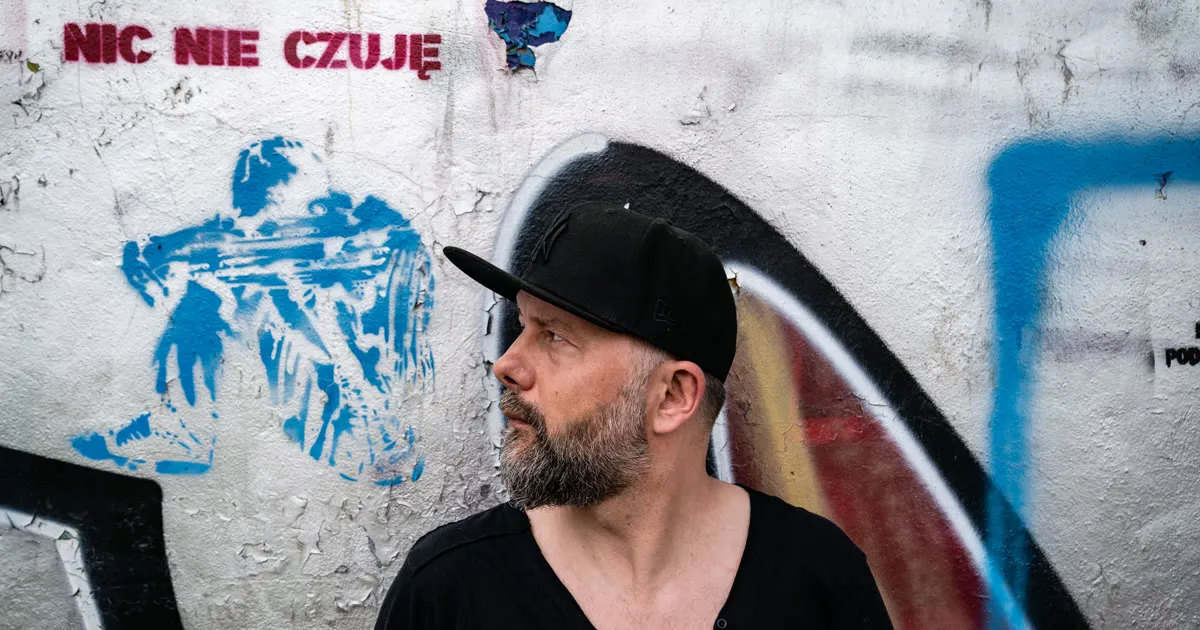
“Nic nie czuję” (“I Feel Nothing”) is a documentary about child psychiatry in Poland, told by those who went through it: four young people and their parents. I appear in it as one of the parents. I write here from a father’s perspective and on purpose I do not tell my child’s story, because it is theirs. Here is what the film shows and why it is worth watching even if you are afraid it will be too sad.
This film and this article deal with suicide and mental health crises
These are Polish numbers. In an emergency call 112. Children and teenagers: the Helpline at 116 111. Adults in crisis: 116 123 or the Support Center at 800 70 2222 (24/7). Parents and teachers worried about a child: 800 100 100. If you are outside Poland, call your local emergency number or crisis line.
In this article you will learn:
- what “Nic nie czuję” is about and who appears in it;
- what a children’s psychiatric ward looked like through parents’ eyes;
- what I heard at work when my child went into hospital;
- how my conversation with my child started again after the crisis (spoiler: with reggae);
- where to watch the film.
What is “Nic nie czuję” about?
It was directed by Anita Bugajska and Janusz Schwertner and made for Onet. It follows four young people who were patients of Polish psychiatric hospitals as children, and their parents. The film’s patron was Martyna Wojciechowska’s Unaweza Foundation, and the premiere went hand in hand with its “Młode Głowy” (Young Minds) programme.
Where does the title come from? From what the young people say. There are so many emotions that they cannot be named, and at some point indifference is all that is left. That is when people say “I feel nothing”.
What does a children’s psychiatric ward look like to a parent?
The first minutes of the film are descriptions of the hospitals where parents left their children or from which they took them home. The smell of old bedding, mattresses on the floor, broken beds. In the film I talk about metal beds “like in a prison”, twenty years old.
How does the system work behind the scenes? I have been telling one story for years. Children who did not eat meat soon had no choice: a sandwich with white processed meat or nothing. When I asked why there was no cheese, I was told it was too expensive. Later it turned out that the food allowance back then was PLN 7.20 a day per child.
Magda, Oliwka’s mum, talks about a single phone in the corridor and a queue of children waiting to call home. Oliwka and Martyna talk about rules under which children who self-harmed had their clothes taken away and were left in pyjamas. Martyna says she felt “branded like a cow in a pasture”.
What did I hear at work when my child went into hospital?
This is the part people ask me about most after watching.
I was working in a corporation at the time. I was, as I say in the film, in a “golden cage, financially and professionally”. When my child went into hospital, I went to my boss and said I did not know what to do. On one side I got a text from the head of the ward saying she had run out of treatment options and my child was to be discharged. On the other I heard about the annual review. The company’s answer was roughly this: we won’t fire you, take two months to look after your child, and then find yourself a new job.
I learned two things back then. The first was a real poker face: the worse things were with my child, the more carefully I dressed and the wider my “smile number five” became. The second was the ability to cry on the inside.
Does it have to be like this? No. A child’s mental health is still a taboo at work, as I wrote in the post on mental health issues as a workplace taboo. That is why I want to talk about it in companies too, to employees who are parents.
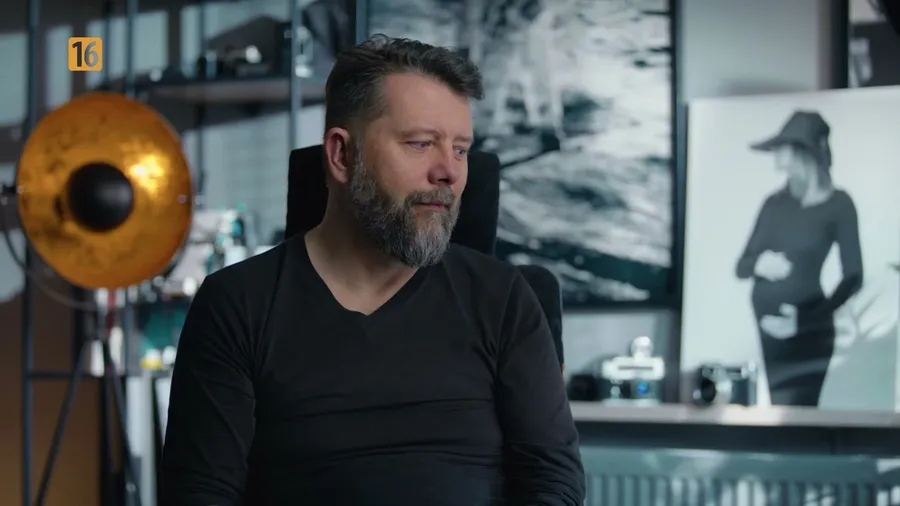
What did my child’s crisis teach me?
That a parent’s love can be overwhelming too. When my child started to recover, they set me the first boundary: even the best intentions can be pressure. “If you don’t eat the soup I made especially for you, I’ll be sad” is exactly that kind of pressure. Back then I did not understand it yet.
And how did our conversation start? With silly things. I blackmailed my child with reggae: if they would not talk to me, I would play reggae in the car, because it calms me down. Then I bought a PlayStation and we played together in the evenings. That is the level our conversation started from.
Magda got very similar advice from a psychologist: if you don’t know what to do with your child, sit next to them, stay quiet, watch what they watch. But be there.
A fragment of my TEDx talk in the film
The makers wove into the film a fragment of my 2019 TEDxWarsaw talk, the one about depression sitting down with the family at Sunday dinner. In the film I also talk about what I heard afterwards from friends and family: that I wanted to “gain something” from it, and “who even talks about this”. Agnieszka, Aurora’s mum, says she was struck that someone had openly said back then that his child had depression. I describe the whole talk and what came of it in the post Depression is the kidnapper of our children.
Why is this film hard, and why is it worth watching?
Because not all the stories in it end well. Wiktor and Martyna are no longer alive. Their mothers talk about it in the film, and I will not summarise it here. After Wiktor’s funeral I remembered the priest’s question: “Where were we then? Where were the teachers? Where was the school counsellor?”.
Dr Agnieszka Dąbrowska, a doctor who left the ward, also speaks in the film. She talks about conversations with children that she had to end after fifteen minutes because she had no more time. And Agnieszka, Aurora’s mum, talks about the absurdity of it all: every day we hear about the crisis in child psychiatry and nothing changes.
Some of my friends have watched neither the film nor my TEDx talk because they are afraid it will be too sad. I understand. But if you have a teenager or work with teenagers, this is an hour and a quarter that may save you a few of the mistakes I made.
You can watch the film (in Polish) on TVP VOD or at nicnieczuje.onet.pl. If you would like me to talk about it at a conference or in your company, see the page about talks on children’s mental health.
FAQ — the film "Nic nie czuję"
Let's talk about children's mental health
I talk about teenagers' mental health crises from the perspective of a parent who is going through one. At conferences and in the media, and gladly at your company too, for employees who are parents.