LinkedIn Talent Connect 2026: Hiring Assistant 2, Verification and My Takeaways
Two days of LinkedIn Talent Connect 2026 in one post: labor market data from LinkedIn's new CEO, Hiring Assistant 2, new ways to verify profiles, lessons from Cisco, astronaut Leland Melvin and Brené Brown. Who spoke, what stuck with me and what it means if you work on LinkedIn.

Rafal Szymanski
I implement LinkedIn and Sales Navigator in companies so they turn a profit.
I've been training people in LinkedIn since 2016 — more than 5,000 of them, across 200+ B2B companies. Founder of B2B Marketing.AI, a CRM platform for advanced LinkedIn users. I help sales and marketing teams turn LinkedIn into a predictable source of leads. I've spoken about LinkedIn at the biggest conferences, including I Love Marketing, InfoShare and Effie, and picked up a few awards along the way.
Published On
In this article you’ll find a recap of LinkedIn Talent Connect 2026, LinkedIn’s annual conference for recruiters and HR: who spoke on the main stage, what labor market data LinkedIn’s new CEO showed, what Hiring Assistant 2 can do, how LinkedIn wants to check that a candidate is real, and what I’m taking away from the two days.
I’ll start with clickbait: I watched two days of the conference so you don’t have to. Seriously though, it was worth it, as usual. I don’t work in recruiting, I teach people to sell on LinkedIn and in Sales Navigator. So why would I watch a conference aimed at HR? Because that’s where LinkedIn shows where the whole platform is heading: profiles, verification and AI that land in the sales tools a few months later. You may not know this, but Sales Navigator and Recruiter, although built for completely different business audiences, look almost the same and run on very similar filters and rules. The difference is that Sales Navigator has every filter Recruiter has except one key filter: whether someone has marked “Open to work” on their profile, which is hidden from everyone but recruiters.
In this article you'll learn:
- who spoke at Talent Connect 2026 and about what;
- what LinkedIn’s data says about the labor market in 2026;
- what changes to profile verification LinkedIn announced and what Connected Apps are;
- what Hiring Assistant 2 can do and when it arrives;
- how Cisco is rolling out AI in recruiting at 10,000 hires a year;
- which leadership tools Brené Brown shared.
TL;DR: Talent Connect 2026 in five points
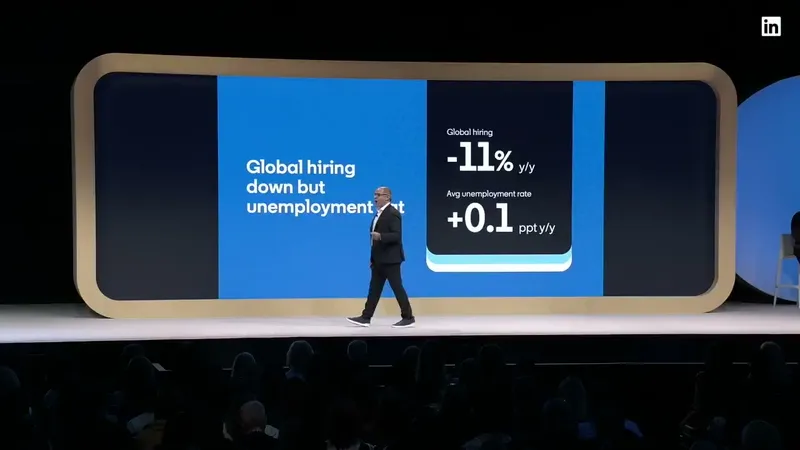
- The jobs aren’t going away, the job market is frozen: global hiring is down 11% year over year while unemployment is nearly flat (+0.1 percentage points). People are holding onto their chairs.
- Candidates write resumes and cover letters with the same AI tools, so recruiters face a “sea of applicants” who look pretty similar. LinkedIn’s answer is verification: 115 million verified members, colleagues verifying each other’s employment, and Connected Apps.
- Hiring Assistant 2 is supposed to do what the recruiter meant, not just what they typed. Current users get it automatically in November 2026.
- Cisco isn’t looking for one big innovation. It has more than 20 small AI use cases in recruiting and a 90-day cohort with peer mentors, because the first time it handed out the tool without support and it didn’t work.
- Brené Brown to companies rolling out AI: we are not going to build on dysfunction. Plus a handful of simple tools that make time where none exists.
Who spoke at Talent Connect 2026
This year’s theme was “Work Like Never Before”. Both days were hosted by Mariana Atencio, a journalist and author who, as she reminded the audience, got her start on the Talent Connect main stage back in 2019.
Day one, September 30:
- Dan Shapero, LinkedIn’s CEO, with “Work, like never before: Leading through an AI inflection point”. It was his first Talent Connect in that role and his seventeenth overall, since he has been at LinkedIn since 2008;
- Leland Melvin, former NASA astronaut and NFL player, with “From mission control to machine intelligence: Leading through the next frontier”.
Day two, October 1:
- Dan Reid, LinkedIn’s VP of Product Management, who introduced Hiring Assistant 2;
- Scott McGuckin, Cisco’s VP of Global Talent Acquisition, in conversation with Alyssa Merwin, LinkedIn’s Global VP of Talent Solutions;
- Brené Brown, researcher and author, on courage, trust and leading through change.
The quotes below come from the recording of the EMEA broadcast, so if you were in the room and heard it differently, let me know :)
What LinkedIn’s data says about the labor market in 2026
Dan Shapero opened with three questions he says people keep asking, and brought LinkedIn’s data to each of them.
Are all the jobs going away? No. Global hiring is down roughly 11% over the last year, but the average unemployment rate is up just 0.1 percentage points. In his words, “it’s not because the jobs are going away. It’s actually because the jobs market’s frozen.” Layoffs are down, people aren’t leaving, and at most companies hiring means filling roles that someone has vacated. There are pockets of growth: healthcare, construction, manufacturing, and the number of new companies being started is up too.
Will AI create new kinds of jobs? Yes, and you can finally name them. Forensic AI analyst, forward deployed engineer and AI safety operator are roles that grew 190% in the last year alone. What Shapero finds more interesting is that the jobs we already know are changing: the skills companies ask for in job postings are changing twice as fast as the skills on U.S. members’ profiles.
Are companies doing more with less? They are. The numbers from his slides:
- 31% of large companies (a thousand employees and up) have become leaner since 2022, and their revenue per employee went up 22%;
- AI-native startups (the slide listed Cursor, Lovable, Perplexity and ElevenLabs, which was founded by two Poles, so I’m claiming it) generate 66% more revenue per employee than large tech;
- half of the S&P 500 reduced the size of their HR team in the last year, and their recruiters are generating 12% more hires per person.
Shapero’s conclusion from those numbers was a line the later speakers kept coming back to: “every hire matters”. It’s not about the size of your team anymore.
Then he introduced three members who stand for how talent behaves today. Riddhi was a new grad who landed a job at ServiceNow, but on the way there she did what her peers do: loaded job descriptions into AI tools and applied to lots of jobs with a resume tailored to each one. That’s where the sea of applicants comes from. As Shapero put it, they look pretty similar “because they are using the same tools to put their best foot forward based on what they think you want.” Alisha is AI native and sits on the other side of that mismatch: people with AI skills like hers get 2.6 times more recruiter outreach and a $28K higher salary. Lillian has a full-time job, wrote a book, creates content and offers herself as a keynote speaker. LinkedIn calls it a portfolio career and says 26% more members now have more than one current position on their profile. Shapero promised changes to the profile that will showcase this better.
My take is a long way from the speakers’ optimism. I wouldn’t call it a career at all, more a side effect of the gig economy. Nobody has a steady, secure job, so we stand on several legs: when one gives out, the others should keep us upright.
The thing I remember best is a customer quote Shapero put on the screen:
“Over the last 18 months, my job has increasingly become focused on transforming the organization, and candidly, I’m still figuring out what it takes to get there.”
Daniel Stevens, VP and Global Head of Talent Acquisition, Palo Alto Networks
Why that one? Because at a conference full of numbers, someone senior admitted he doesn’t have the answer yet. One caveat about the data: all of it is LinkedIn’s own, and most of it describes the U.S. or large companies, so I’d apply it to the Polish market with care.
Profile verification and Connected Apps: is this person who they say they are?
Shapero sounded surprised to be asking this from a stage: “Ten years ago, this was not the problem we were talking about.” Today, he said, he hears of recruiters going back to pencil and paper, in person, just to know they’re talking to a human and not to an AI doing the interview on someone’s behalf.
LinkedIn says 115 million members have verified themselves, either through government ID or through a work email. Three things are coming:
- Colleagues will be able to verify each other. This is meant for people who live in places where the usual process isn’t available or who can’t verify the traditional way, and LinkedIn will show how each person was verified.
- Employers will be able to indicate that someone who lists their company never worked there, and disconnect that profile from the organization.
- Verification gets baked into the apply process, so by the time an applicant reaches the recruiter, they know whether that person is verified.
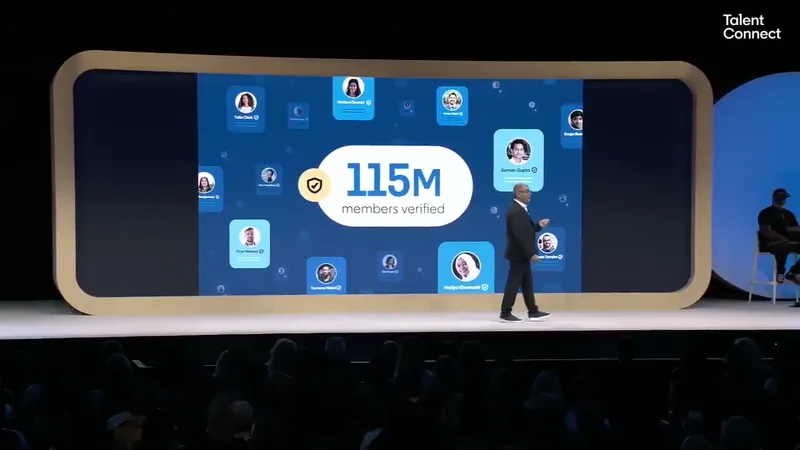
I have two comments on this part. First, 115 million is about 9% of the accounts registered globally. I don’t know whether that’s a lot or a little, but I expected the number to be higher, because LinkedIn doesn’t just nudge people to verify, in some situations it forces them to. I wrote about that when LinkedIn forced 2FA on paid accounts.
Second, the problem of fake accounts attaching themselves to real companies must be big enough that LinkedIn decided to build new features to deal with it.
The second question is how you know someone can do what they claim. Here LinkedIn is betting on Connected Apps, launched earlier this summer. You connect your profile to a tool you use every day, and the tool itself sends LinkedIn signals about what you do in it. Shapero showed Replit: the profile shows what the person builds with it and which projects they agreed to share. He summed up the strategy as “we want members to show work, to get work”, and said the signals will feed into Jobs, Recruiter and Hiring Assistant.
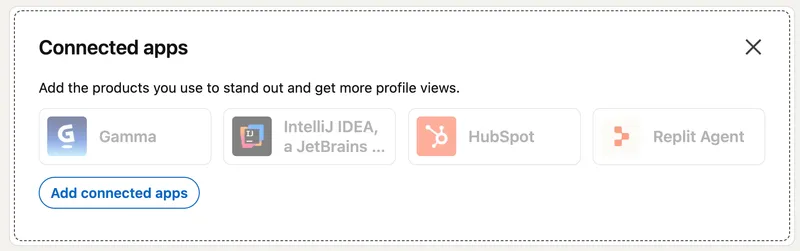
Will the second item on that list work? In my opinion it’s the most interesting of the three, because fake employment on a profile isn’t only a recruiter’s problem. Anyone looking for customers on LinkedIn judges people by where they work.
Hiring Assistant 2: what’s new and when
Hiring Assistant is LinkedIn’s AI agent for recruiters. The idea was shown at Talent Connect two years ago, and in 2025 the product launched worldwide. LinkedIn’s scorecard after a year: more than 20,000 customers, 83% fewer profiles reviewed to find qualified matches, and interview-quality applicants found 33% faster.
Dan Reid, who runs the product, joked about it himself: “of course I’m going to say 83% better. I’m the product guy.” Right after that he put up what he called the real talk slide, with customer feedback on it: “needs to be smarter”, “doesn’t learn quickly”, “too time-consuming and burdensome to train”. The day before, Shapero had told the room that the product team tracks the number of expletives recruiters type into the assistant, and after the last model change the number went down. Seriously, that’s one of their metrics.
What changes in version two? Underneath there is a reasoning model that plans its steps, remembers your preferences and has more tools to act with. Reid explained it with nachos. Ask the old assistant to buy chicken, salsa and cheese and it comes back with chicken, salsa and cheese. The new one understands you want nachos, so it also buys chips, and the ones you like, because “you can’t have nachos without chips”.
“Do what I meant, not what I said.”
Dan Reid, LinkedIn
The example used on both days: a recruiter types “account director”, and the assistant fills in the rest from how that company has hired before, meaning B2B sales, a SaaS background, a commutable distance to a particular office and company rules (for example, never hiring from your own subsidiaries). The recruiter confirms or corrects it. Shapero’s version of the recruiter’s reaction: “I feel heard. I feel seen.”
The three areas where Hiring Assistant 2 is supposed to deliver more:
- get value more easily, with fit signals: instead of a checklist of must-haves, each candidate comes with strengths and things to consider. On the slide, a candidate for a sales role carried a note that their experience was in growing existing accounts rather than new business prospecting. You can also just type what you mean, for instance that you want someone with “a fresh perspective”, which, as Reid said, is hard to write as a Boolean search;
- better understand applicants: the assistant takes into account identity, employment and education verification, the LinkedIn profile, insights from your ATS, the resume and evidence from Connected Apps. It also compares the resume with the profile and flags variances, such as inconsistent employment dates;
- hand off more of the work: collecting hiring manager feedback (you can share a candidate’s evaluation straight into Microsoft Teams), an initial voice or text screen, evaluating the responses and coordinating interviews.
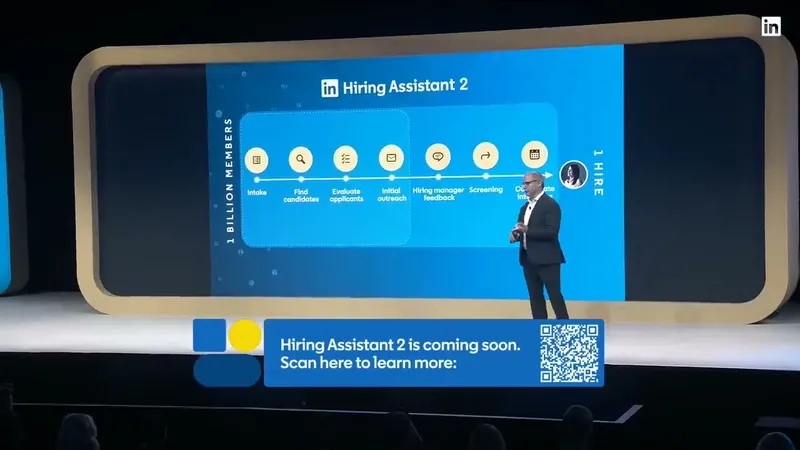
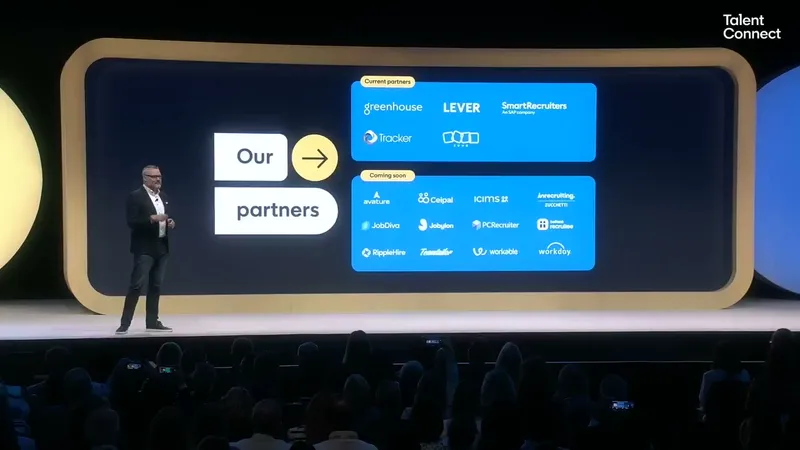
Reid repeated several times that the hiring choice stays with the human: you can turn each action on or off, “take the wheel at any time”, and see how a candidate was evaluated and why. He also showed the list of ATS partners. Current ones include Greenhouse, Lever and SmartRecruiters, and the “coming soon” list includes Workday, iCIMS and Workable.
When? Current Hiring Assistant users get version two automatically in November 2026. No migration, which was the slide Reid asked the audience to clap for.
Why am I writing about this on a blog about selling? Because I see the same direction in Sales Navigator. September’s Sales Navigator search is also supposed to understand a description of the buyer instead of keywords alone, and Lead IQ in your CRM summarizes a lead the way the assistant here summarizes a candidate. I have the same reservation as there: LinkedIn’s AI features work best in English, and Lead IQ doesn’t show up at all when your account language is set to Polish.
I assume that, just as the current Hiring Assistant doesn’t work in Polish, version 2 won’t either. Is that a problem in the age of live AI translation? I don’t think so.
How Cisco is rolling out AI in recruiting
Scott McGuckin runs talent acquisition at Cisco: about 83,000 employees, more than 80 countries and 10,000-plus hires a year. He opened by saying he fell into recruiting by accident and stayed because “recruiting really is the ultimate sales and marketing career, except the product is human potential.”
Where did Cisco start with AI? With a Formula One racing team, which doesn’t win through one big innovation but through hundreds of improvements that compound over time. McGuckin called it “the aggregation of marginal gains”. They mapped the life cycle of a requisition and looked for friction at every step. The result is more than 20 AI use cases for this year. The first two are a job description agent that creates market-ready job descriptions in minutes, and an interview architecture agent that builds the structured interview process, the questions and the scorecards. Neither will revolutionize recruiting, but a few hours a week given back to each recruiter across 10,000 hires adds up.
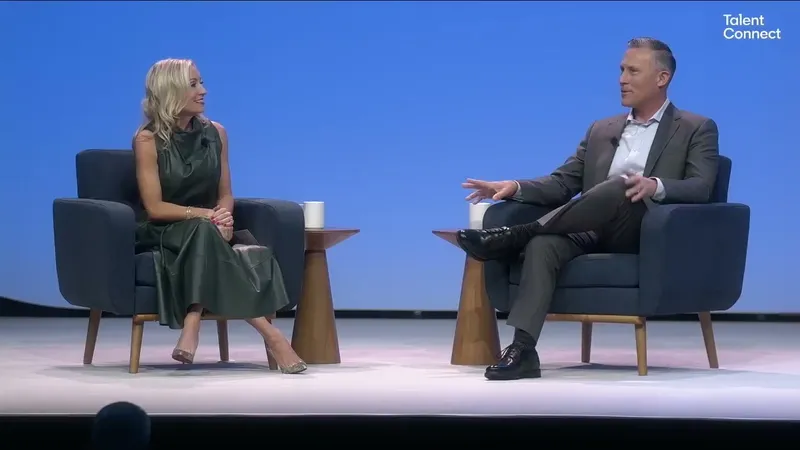
What I liked most is that McGuckin owned up to a mistake. Cisco was a charter customer of Hiring Assistant and rolled it out badly: they provided it, everyone was curious, but there was no follow-up and no reporting. What did they change?
- every new user joins a 90-day cohort with a peer mentor, another recruiter carrying their own reqs, not a trainer;
- TA leaders keep the cohort on track and report to McGuckin at 30, 60 and 90 days;
- they hired someone whose sole job is to measure AI: adoption, impact and how the agents themselves behave.
On that last point he quoted Cisco’s chief product officer:
“Agents are like teenagers. They can develop a mind of their own, and so they need supervision.”
Scott McGuckin, Cisco
One number: with a limited number of seats, Hiring Assistant at Cisco reviewed 60 times more profiles than recruiters working without it. One of his recruiters called it “a force multiplier”. McGuckin’s advice to smaller teams is where Cisco itself started: take the life cycle of a req, break it down and look at where agents can play a role. You don’t need a large enablement team for that, you need one person who can think it through and plan it.
He closed by flipping the acronym: AI to IA, short for “I am”. I am a manager, a leader, a mentor, a friend. When someone on the team is dealing with illness, kids or aging parents, AI won’t meet them in that moment, so “we need to meet humans with more humanity.”
This example got to me because I very often train a company on LinkedIn or Sales Navigator using accounts they bought themselves, while they have no idea that their parent company has a global contract and they have Sales Navigator licenses “for free”. In September I trained a global company only because its employees noticed a new icon on LinkedIn and didn’t know what it was for. Seriously.

Leland Melvin: second chances and the people in the yellow hat
Why an astronaut at an HR conference? To talk about the people who believed in someone. Leland Melvin calls them the men and women in the yellow hat, after the Man in the Yellow Hat who looks after Curious George.
His story in short. In a high school homecoming game he dropped a touchdown pass with two minutes left. His coach grabbed his face mask and said, “Leland, I believe in you. Catch the ball.” They ran the same play, he caught it, and that one catch turned into a $185,000 scholarship to the University of Richmond. The Detroit Lions drafted him and cut him, and then the Dallas Cowboys did the same. At a career fair a NASA recruiter literally grabbed his arm while he was walking past her booth toward DuPont and Dow, which paid about $50,000 more. During spacewalk training in the pool he lost his hearing and was medically disqualified from flying in space.
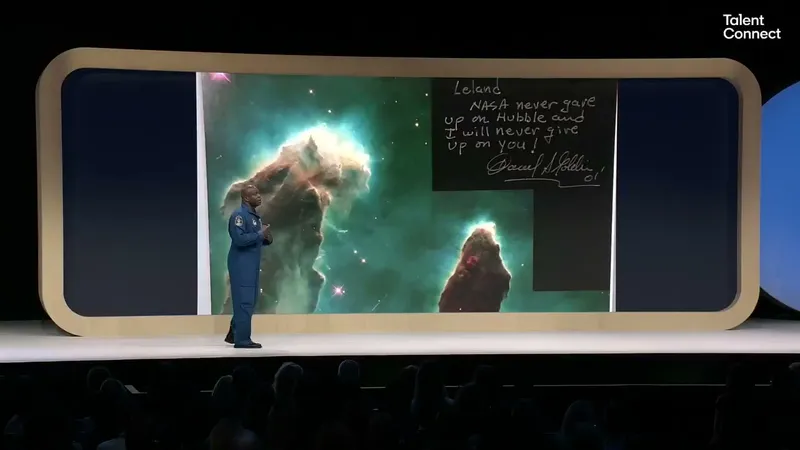
That was when NASA’s administrator Daniel Goldin gave him an image from the Hubble Space Telescope (the one that sent back blurry pictures after launch and was repaired in orbit by astronauts) with a handwritten note:
“Leland, NASA never gave up on Hubble and I will never give up on you!”
Daniel Goldin, then NASA Administrator
After the Columbia disaster Melvin traveled to the memorial services and looked after the families of the crew. NASA’s chief medical officer sat next to him on every flight, watched him clear his ears on every takeoff and landing, and then signed a waiver for him to fly. Melvin went to space twice, in 2008 and 2009.
What’s in it for recruiters? Two questions he put to the room. “How many employees have failed horrifically, but they will probably be your best employees when you give them a second chance?” And how do you find people who are there for the mission, not the ones who “just get a bonus and then leave six months later”? After The Martian came out, 18,000 people applied to become astronauts. Melvin sat on two selection boards and says what mattered was the one-hour interview around the table, finding out what really drove the person.
There was an anecdote for LinkedIn too: he met his wife Linda through LinkedIn in January, and they got married three days before the conference. Twice he called it “the LinkedIn dating app”. If I were Dan Shapero I’d be pleased, although I do have an unpublished draft about people treating LinkedIn as a dating app.
Brené Brown: how to make time where none exists
Brené Brown asked the organizers for 90 minutes, was told she had 30, and opened with the irony of that, because the biggest thing on the minds of the people in the room is time scarcity.
Who was she talking to? HR leaders. Her company has taken 170,000 leaders across 45 countries through Dare to Lead, and she says she won’t work with an organization where the CHRO and the CEO are not “absolutely in lockstep”. On AI she said two things at once: “I do believe AI is super dangerous. And I am also an early adopter.” She has had an agent for almost 20 months that knows her whole life and answers her questions with things like “you’re a social scientist. Get off TikTok.”
The strongest line came with a story about an injury. Her trainer told her she had no core at all and that they weren’t going to build on dysfunction. She says she gives the same speech to every CEO she works with on AI:
“We are not going to build on dysfunction. People are not okay. People have to believe it’s happening for them, not to them.”
Brené Brown
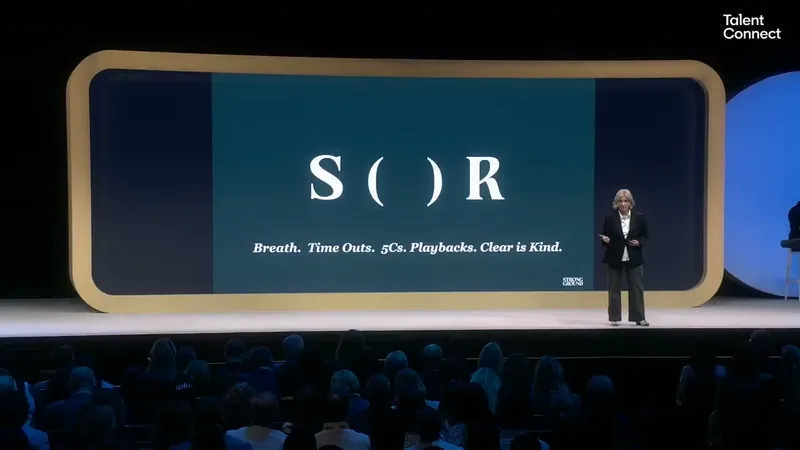
The tools I wrote down:
- cognitive dollars: “If you leave for work in the morning with 100 cognitive dollars, you owe it to yourself and the people you love to come home with 40.” Going below the line (hero, victim or villain mode) and coming back up costs you 25;
- a lock-through plan: like a ship that has to go into a lock and come up or down to meet the next flow. Hers is 20 minutes alone, in sweats, before anyone asks what’s for dinner;
- the two-word check-in: at the start of a meeting everyone says how they’re feeling today. A team of ten takes 90 seconds;
- the five Cs and a playback: before someone starts on what you asked for, you give them color, context, connective tissue, cost and consequence, and they play it back in their own words. That’s how her chief of staff caught that Brown, an hour before a call with a CEO in crisis, was asking for the wrong data;
- “clear is kind”: a company that says it has “a nice problem” usually has a clarity problem, because people talk about each other rather than to each other;
- a morning brief from an AI agent: two to four pages on the company and on what in the world could affect it. That’s her advice to HR people who want to be a “performance partner” to the C-suite. In Poland I’d come across a similar label, “talking partner”, on Monika Pakulska’s LinkedIn profile.
She also used a term I have in my own AI training: “work slop”. Brown, who teaches in an MBA program, says she can smell it from a mile away: work “absent your discernment and full of frictionless, well-written stuff” transfers all the effort to the reader, and its author loses in ten minutes the trust it took ten years to earn.
What I’m taking away from Talent Connect 2026
First, the sea of applicants isn’t just a recruiter’s problem. What happens when every seller starts writing messages with the same tool? The same thing: the buyer gets ten connection requests that sound identical. Brené Brown called it work slop, and it’s what I warn people about when they write InMails.
Second, verify your profile. LinkedIn is putting verification into the apply process and into candidate evaluation, and in my experience what starts in the hiring products usually reaches the rest of the platform later.
If you’re an employer, you can do it for your people through the company email. It isn’t simple to turn on and configure, but I’ll help.
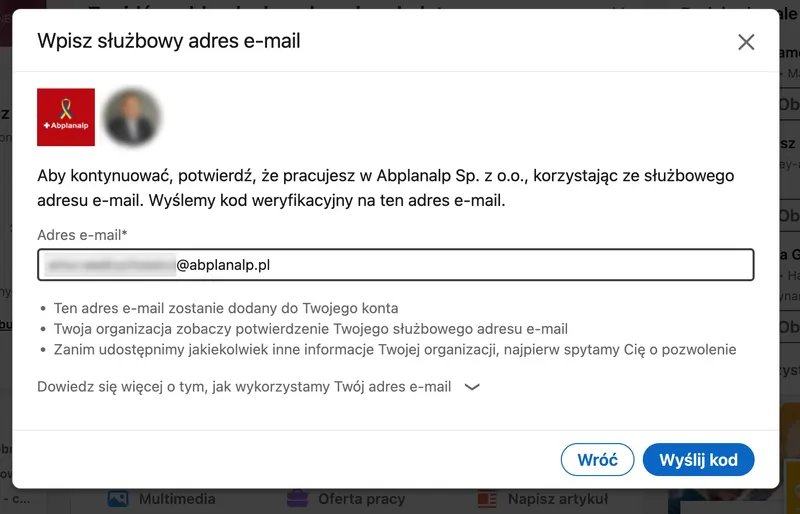
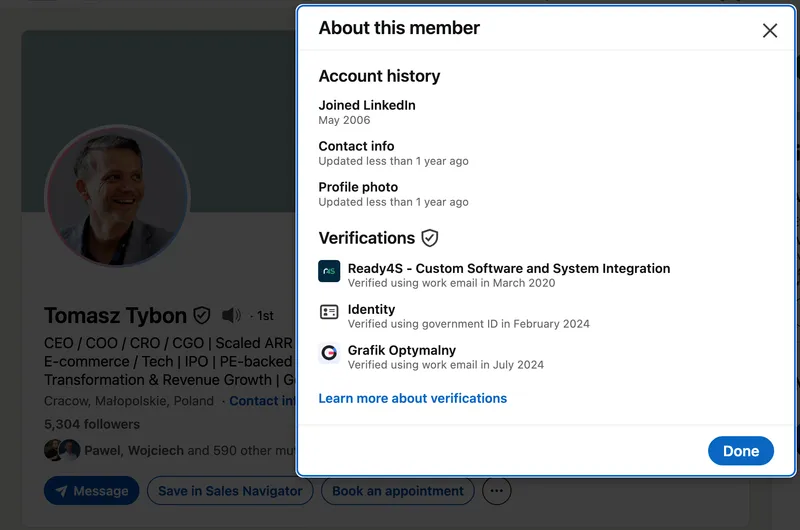
If you’re an employee, do it, it’s worth it. Here’s someone who has done it three times.
Third, the numbers from the stage are LinkedIn’s marketing, and the 83% and 33% come from the company selling the product. But the Cisco story shows something I see with every tool: buying the license changes nothing if nobody helps people use it.
Fourth, I got the most out of Brené Brown, not out of the product announcements. I’ll try the two-word check-in at my next training session.
If you want your sales team to use LinkedIn and Sales Navigator with their heads switched on, have a look at my LinkedIn training for companies.
Did you watch Talent Connect? What stuck with you?
Frequently asked questions about LinkedIn Talent Connect 2026
Maybe we can do something together?
If you like what I write, maybe I can write something for you?