Child and Youth Mental Health: A Plan for Mazovia. Lessons from the Debate
At the Mazovia Development Forum I moderated a debate on child and youth mental health with regional psychiatry consultants, the regional government and heads of treatment centres. Who spoke, what we agreed on and what proposals were made for Mazovia.

Rafal Szymanski
I implement LinkedIn and Sales Navigator in companies so they turn a profit.
I've been training people in LinkedIn since 2016 — more than 5,000 of them, across 200+ B2B companies. Founder of B2B Marketing.AI, a CRM platform for advanced LinkedIn users. I help sales and marketing teams turn LinkedIn into a predictable source of leads. I've spoken about LinkedIn at the biggest conferences, including I Love Marketing, InfoShare and Effie, and picked up a few awards along the way.
Published On
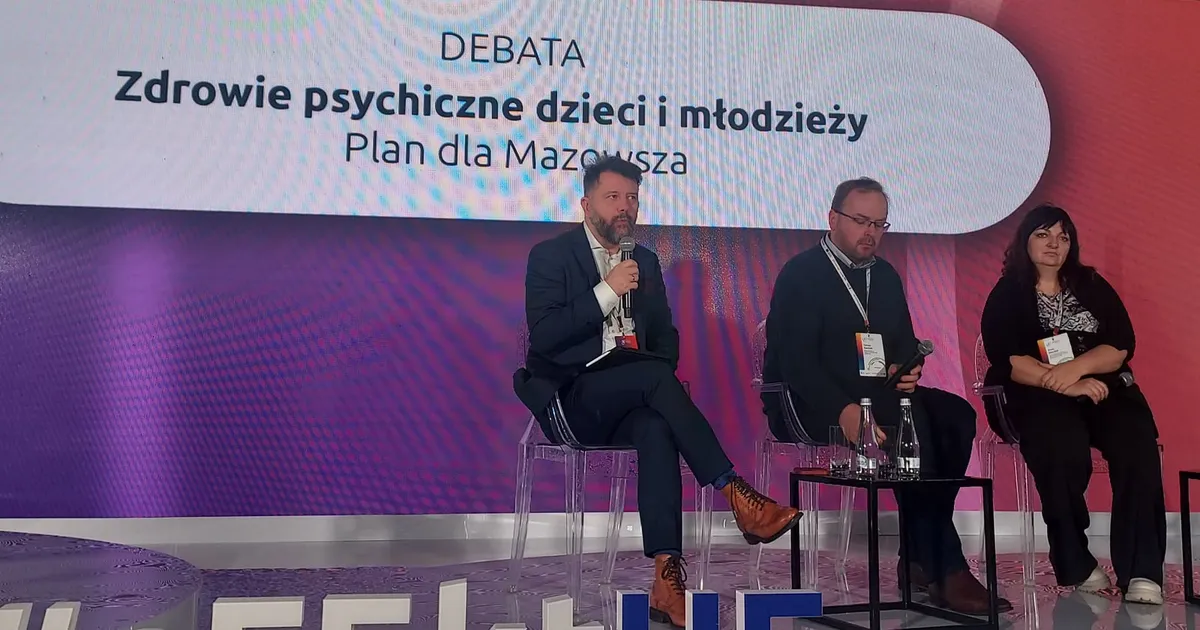
In this article you will find an account of the debate “Child and youth mental health – a plan for Mazovia” held at the 12th Mazovia Development Forum: who spoke, how Poland’s reform of child and adolescent psychiatry works, why a child cannot be treated without their family, what the regional government is doing and what proposals were made for Mazovia (Mazowsze, the region around Warsaw). Plus my own experience as a dad whose child spent several years being treated and going to school at a centre in Zagórze.
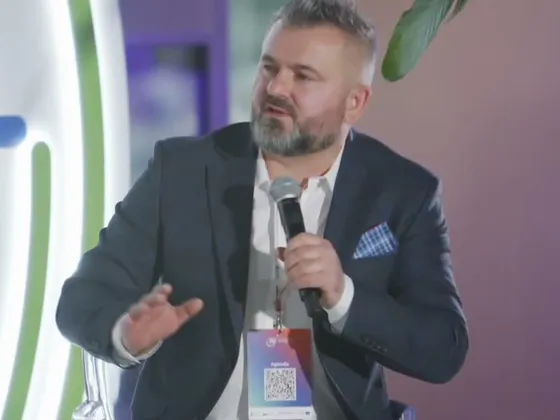
This time I was not one of the panelists. The Mazovian Unit for the Implementation of EU Programmes asked me to prepare and moderate the debate. And since the people across from me were the ones whose decisions shape how children are treated in Mazovia, I put the questions the way a parent would ask them.
If a child is in danger right now
In Poland, call 112. Children and teenagers can talk to the Helpline for Children and Young People 116 111; adults worried about a child’s safety can call 800 100 100. Outside Poland, call your local emergency number.
In this article you will learn:
- who took part in the debate on child and youth mental health at the Mazovia Development Forum;
- how the three levels of psychiatric care for children work in Poland;
- why treating a child in isolation from their family does not work;
- what is missing most: day wards, information for parents and cooperation with schools;
- what proposals were made in the “plan for Mazovia”.
What the debate was about and who took part
The debate took place on 7 December 2022, on the second day of the 12th Mazovia Development Forum at the Legia Warsaw Conference Centre. The whole Forum had 18 debates and more than 80 experts, and ours lasted just under an hour. The audience included mayors and local government officials, which mattered to me, because they are the ones who know best what their municipalities are missing.
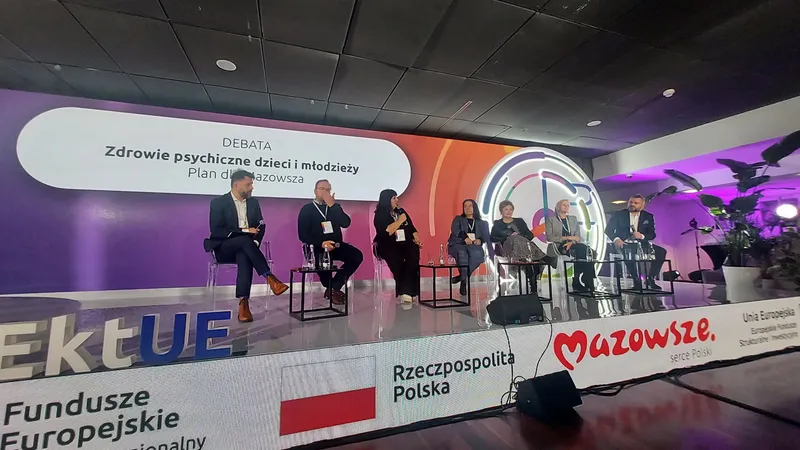
There were seven of us on stage:
- Elżbieta Lanc, member of the Board of the Mazovian Voivodeship (the regional government), a teacher by profession;
- Dr Anna Depukat, MD, head of the Office for the Pilot of the National Mental Health Programme, a psychiatrist and psychotherapist;
- Michał Stelmański, CEO of the Mazovian Neuropsychiatry Centre in Zagórze;
- Dr Lidia Popek, MD, regional consultant in child and adolescent psychiatry;
- Dr hab. Maria Radziwoń-Zaleska, MD, regional consultant in psychiatry;
- Dr Tomasz Rowiński, CEO of EZRA UKSW and deputy director of the Institute of Psychology at Cardinal Stefan Wyszyński University in Warsaw, member of the Ministry of Health team for the reform of child and adolescent psychiatry;
- me, as moderator.
I started with why we were talking about this at all. If we do not look after young people’s mental health now, in a dozen or so years they will form a depressed society struggling with problems, and we adults are responsible for that.
The full recording (in Polish) is on the Fundusze Europejskie dla Mazowsza channel:

Why a child cannot be treated without their family
While we were preparing, someone said a sentence that I proposed as the motto of the whole panel: the idea that we can treat children and young people in isolation from their families is simply wrong. Unfortunately, that is exactly how the current funding system and the design of treatment centres look.
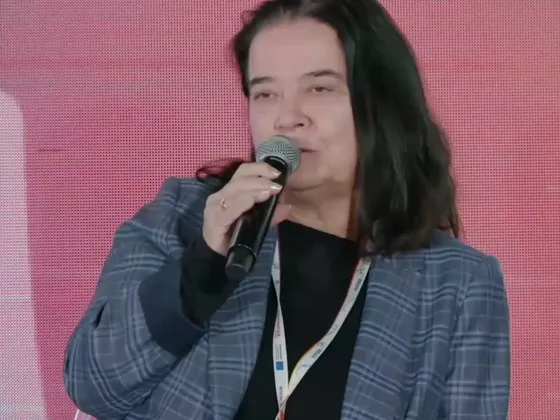
Each panelist got there from a different direction. Dr Radziwoń-Zaleska reminded us that behind a sick child stands the whole family, and a parent worn down by the situation often has nowhere to go, because adult mental health clinics have waiting lists that are too long and not everyone can afford longer private therapy. Tomasz Rowiński suggested that adult mental health centres should work with children’s units and look after the parents.
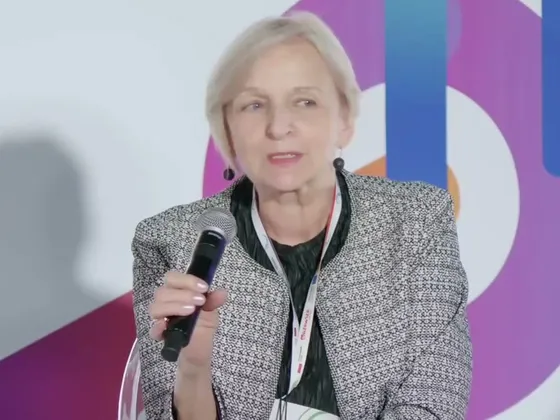
Dr Popek’s words hit hardest. Do parents readily use help for themselves? In Zagórze they run free, anonymous psychoeducation meetings for parents, meant to prevent readmissions, and few people come. Dr Popek quoted the mother of a sick girl: when her daughter fell ill, she felt she had lost her, as if they had both fallen into a black hole they had to climb out of together. And she added something I sign up to as a parent: when a child has a heart condition or cancer, the family unites, but when a child is mentally ill, the parents are usually blamed.
How Poland’s child and adolescent psychiatry reform works
Dr Popek described the reform, which started at the worst possible moment, together with the pandemic. It has three levels:
- First level: psychological and psychotherapy clinics with family, individual and community therapists, as close to home as possible, no referral needed. In Mazovia in December 2022 there were 80 of the planned 91. Across Poland, as I checked with Tomasz Rowiński, about 370.
- Second level: psychiatrists, psychological assessment, individual, group and family therapy, plus day wards, which Dr Popek called the most ideal place to diagnose and treat children.
- Third level: hospitals, including locked wards for children in the most serious condition, after suicide attempts or with behaviour that endangers themselves or others. Children there are still without their parents, which Dr Popek deeply regrets.
The idea of the reform is simple: treat the child in their own environment and keep hospital as a last resort. And do not stigmatise psychiatry.
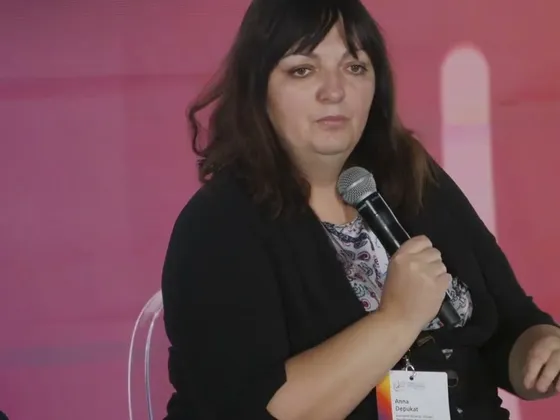
Dr Depukat added what the biggest challenge is today. First-level centres are being set up, but a day ward only makes sense if it is nearby. And there are too few such wards in Poland. I pointed out that the same applies to the first level: if you look at the map, the centres are not spread out in a way that allows local access everywhere, because 50 kilometres is no longer local. Mazovia comes out best here.
School and therapy in one place: our experience in Zagórze
Here I could tell something from my own life. My child spent several years at the centre in Zagórze and passed their secondary school final exams (the matura) there.
Why was that so important to us? Because the stigma is still huge. In Warsaw, going to a psychologist or psychiatrist is “still somehow acceptable”, but in a smaller town a child who has been to hospital is already a “nutter”. And that is a serious barrier to starting therapy. That is why I am so glad about the first-level centres, which are not called psychiatric: you simply go to see a specialist.
For us, though, the greatest value was the second level, meaning Zagórze: school and therapy in one place, with us parents involved in the treatment. We live outside Warsaw, and to get there my child got up at five in the morning. On their own. They travelled an hour and a half each way, because they cared that much about that school and that therapy. I got emotional on stage telling this.
And the exams? They were final exams from a normal school, with no label attached. Hence my appeal to the local officials in the room: if you have premises, funds or know how to help open such a centre, the operational details can be worked out. As a parent I am telling you it really helps.
I called doctors in child and adolescent psychiatry “Dr Judyms”, after the self-sacrificing doctor from Stefan Żeromski’s classic Polish novel “Homeless People” (I once borrowed the phrase from an interview with Tomasz Rowiński). They could move to the private sector and earn much more, and yet they stay with these children. Michał Stelmański added at the end that the same goes for teachers in hospital schools, where a class can have thirty pupils with special educational needs statements. He called them “double Judyms”.
Young adults between 16 and 18
I asked this from my own experience. I once counted that we had “done” six or seven hospitals, including adult ones. What about young people who are no longer children but not yet adults?
Dr Radziwoń-Zaleska admitted that this is a problem at the boundary between child and adult psychiatry. There was even an order to admit 16- and 17-year-olds to general adult psychiatric wards, which staff refused to accept, because contact between a young person and older patients can be dangerous. One idea for a later stage of the reform is wards for children and young people in general hospitals, with full medical facilities. For now that is a distant prospect, and this group needs special care.
What the Mazovian regional government is doing
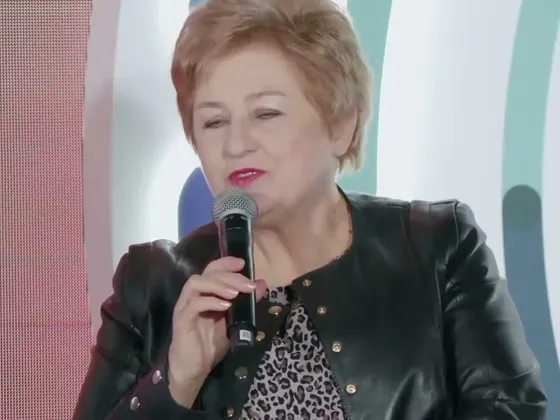
Elżbieta Lanc described what the region does on its own. It is short of 50 beds on acute wards, and there are already plans to expand the hospital in Józefów. In 2022 the region spent more than PLN 9.4 million on support programmes:
- depression screening for children and young people;
- mental health promotion, lessons about depression and workshops;
- programmes for parents and for social welfare staff;
- “Pan Niezwykły” (“Mr Extraordinary”), a musical about behavioural addictions.
On top of that there are Health Promoting Schools and the idea of making health a separate subject from year four, not an add-on to form time. The region also funded a branch school at the day ward in Piaseczno, even though that is not one of its statutory tasks. Opening it took a year, because the procedure for setting up a school is hard. Elżbieta Lanc summed it up: treatment without education would be incomplete.
The Bielany model: why psychiatry needs local government
I knew the programme EZRA UKSW had run in Warsaw’s Bielany district with its mayor, Grzegorz Pietruczuk, so I asked Tomasz Rowiński to talk about it. For more than three years, with EU social innovation funding, they tested a Community Mental Health Centre model there, meaning the first and second level in one place. The model is being scaled up elsewhere in Poland.
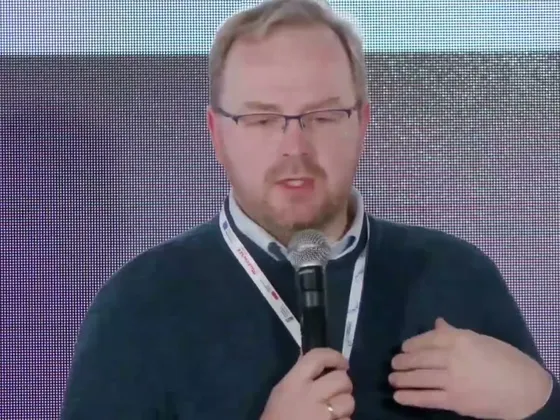
Was the medical side hard? Not really. The hard part was cooperation between institutions. The first three months were spent going from school to school and from institution to institution. Doors only opened once the mayor asked for a meeting. The social welfare centre joined straight away, but some schools refused, even though it was clear their pupils were the centre’s patients.
I asked why. The answer: it always comes down to the head teacher, who is afraid, sees no need or says there is no problem. I added that parents can be the second barrier. Elżbieta Lanc gave an example from the other side: Węgrów, a town of 13,000 people, where the centre works brilliantly because teachers and head teachers understood how important the problem is.
School and mental health prevention
I guessed the subject of teachers would come up, so I checked something before the panel. In 2011 I took part in preparing guides for teachers: how to work with a pupil with mental health problems, with a pupil with ADHD, with a pupil with aggression problems. Those guides are good and still up to date. I could not find newer versions in the materials available to teachers.
Tomasz Rowiński pointed to the other side. School is there to teach, not to treat, and the teachers in Bielany were well trained. But what good is that when one class can have six children with special educational needs statements? That is why the answer is working at the level of a specific class and a specific pupil, together with the teachers.
Dr Depukat said what I consider the most important thing in this part: “the wave is flooding us”. The needs are already so great that if we focus only on treatment, there will never be enough resources. We have to move to prevention, and effective prevention happens where all the children are, which is at school. Without cooperation between the ministries of health and education it will not work.
Dr Popek moved that boundary even earlier, to pregnancy. At the Mazovian Neuropsychiatry Centre they run parent–infant psychotherapy, which the team trained in for several years at the Anna Freud Centre in London. It is not therapy for the ill, but for parents who feel differently with their baby than they had imagined.
Where should a parent look for information?
Towards the end I asked a question on behalf of the local officials in the room: which door should someone knock on if they have the will and the funds but do not know where to go?
Michał Stelmański pointed to an information gap. What is missing is a simple app where a parent enters their postcode and gets the address of the nearest first-level centre. And a national campaign that says: the system is there, go to this door.
I added my part. When I ran a blog about teenage depression, the first question parents asked at our workshops was: I have handed my child over to a hospital, so where do I look for help? Together with the Office of the Patient Rights Ombudsman we solved it “with a thick thread”: the Ombudsman’s website has a list of several hundred local organisations where a parent can get support. It matters, for example, for parents of non-binary children or of children with a particular kind of problem. The current list of organisations working for mental health (in Polish) is still there. If information on where a child can get first help were combined with information on where a parent can find support, we would have the full picture.
A plan for Mazovia: proposals from the debate
Tomasz Rowiński came with a list:
- A Centre for Young Children and Families as prevention, ready to implement and fully costed.
- Peer support in secondary schools as suicide prevention, tested in Kraków.
- Cooperation between adult mental health centres and children’s units, so that the whole family is cared for.
- A well-thought-out placement of second-level centres and inviting doctors back into the public system.
How did the region respond? Elżbieta Lanc immediately asked why he had not come with this two months earlier, when they were drawing up the budget. But she added: “we’ll manage”.
Dr Popek corrected one thing: there are enough doctors in Mazovia according to World Health Organization ratios. What is missing are psychotherapists and psychologists, and keeping doctors in public facilities is a question not only of money but also of how work is organised. She also appealed to the media to cover child and adolescent psychiatry not only when there is a sensation.
Doctors are not missionaries
At the end I said what I disagree with. Shortly before the debate, a politician said that doctors should have a mission like priests. In my opinion a mission can be a bonus, but not the driving force. Doctors should have comfortable working conditions, so that they do not have to choose between a mission and supporting their families with dignity, and so that nobody has to debate whether private care is better than a public hospital.
Why do I think so? Because at the end of it all there is the patient. The professional term is “client”; to me it is simply a human being. I know that a young person who crosses the threshold of a hospital becomes a patient and somewhat stops being a person. We talk about this in the teams at the Patient Rights Ombudsman and the Commissioner for Human Rights, which I work with.
I closed with the wish that we meet again in a year or two in the same line-up, ideally with politicians, and report on what came of these proposals.
You can read more about what I do in this area on my social activities page, in the Mazovia Development Forum portfolio entry and in the post about another debate: How to Help a Child in a Mental Health Crisis: Lessons from the FDDS Debate.
FAQ — child and youth mental health in Mazovia
Maybe we can do something together?
If you like what I write, maybe I can write something for you?