Child and Adolescent Psychiatry in Collapse: Lessons from the Debate at Campus Polska Przyszłości
In August 2022, at Campus Polska Przyszłości in Olsztyn, I took part in the debate "Let's stop being silent, let's start shouting! Child and adolescent psychiatry in collapse". Next to me sat the national consultant, the director of a psychiatric hospital and a young activist. Who spoke, what the audience asked and what has changed since.

Rafal Szymanski
I implement LinkedIn and Sales Navigator in companies so they turn a profit.
I've been training people in LinkedIn since 2016 — more than 5,000 of them, across 200+ B2B companies. Founder of B2B Marketing.AI, a CRM platform for advanced LinkedIn users. I help sales and marketing teams turn LinkedIn into a predictable source of leads. I've spoken about LinkedIn at the biggest conferences, including I Love Marketing, InfoShare and Effie, and picked up a few awards along the way.
Published On
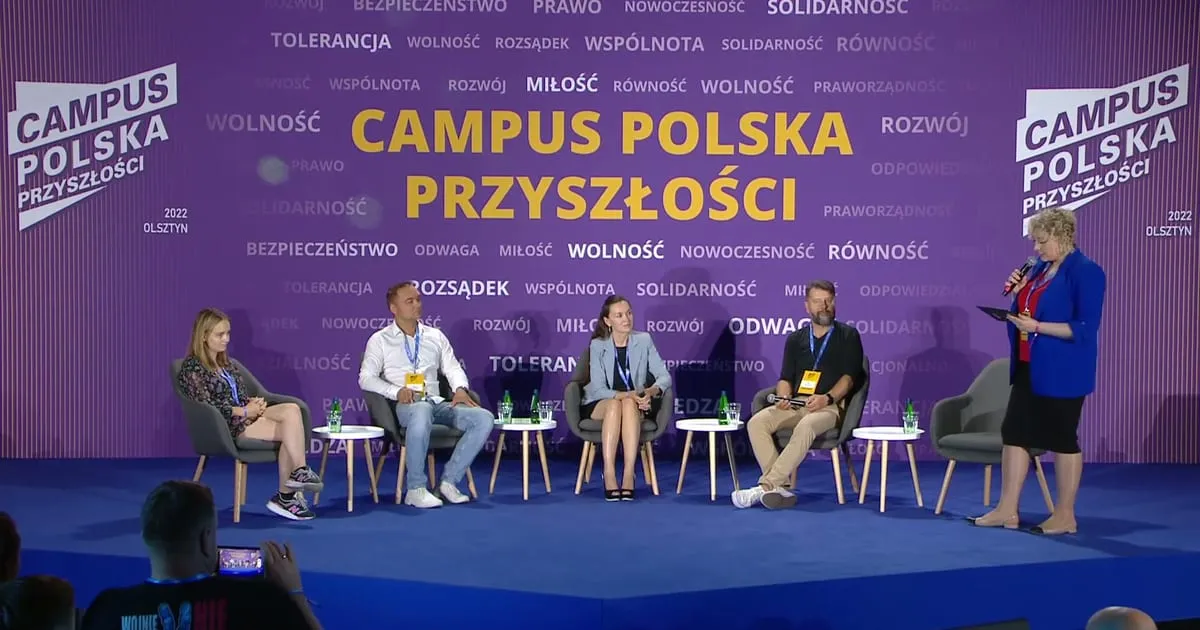
In this article you’ll find an account of the debate “Let’s stop being silent, let’s start shouting! Child and adolescent psychiatry in collapse” from Campus Polska Przyszłości 2022 in Olsztyn, Poland: who spoke, whether a psychiatric hospital is something to be afraid of, what a 46-bed ward with 60 children in it looks like, what the young people in the audience asked and what we disagreed about on stage. Plus my own story as a parent, which is where the debate began.
At the end I check what has changed in four years, including what happened to the bill Marta Golbik announced from the stage that day.
Monday, ten in the morning, the sports hall on the Kortowo campus, known for that week as Campus Arena. Marta Golbik, the member of parliament who came up with this debate and hosted it, opened by saying how good it was to see so many people at that hour. What surprised me was something else: the organizers gave this topic the largest room, for more than 700 people, and the best slot in the program. The stands were full.
If a child is in danger right now
In Poland, call 112. Children and teenagers can talk to the Helpline for Children and Young People 116 111; adults worried about a child’s safety can call 800 100 100. Outside Poland, call your local emergency number.
In this article you'll learn:
- who took part in the child psychiatry debate at Campus Polska Przyszłości;
- whether a psychiatric hospital for children is something to fear;
- what to do when a classmate is in crisis;
- what a children’s psychiatric ward looks like to the director of the hospital;
- what a municipality can do, and what a school can do;
- what a teenager can do when their parents refuse therapy;
- what has changed since 2022.
What the debate was about and who took part
The debate took place on August 29, 2022, on the fourth day of the second edition of Campus Polska Przyszłości, a late-summer event for young people, on the Kortowo university campus in Olsztyn. It was the first item of the day on the main stage, lasted a little over an hour and was streamed live.
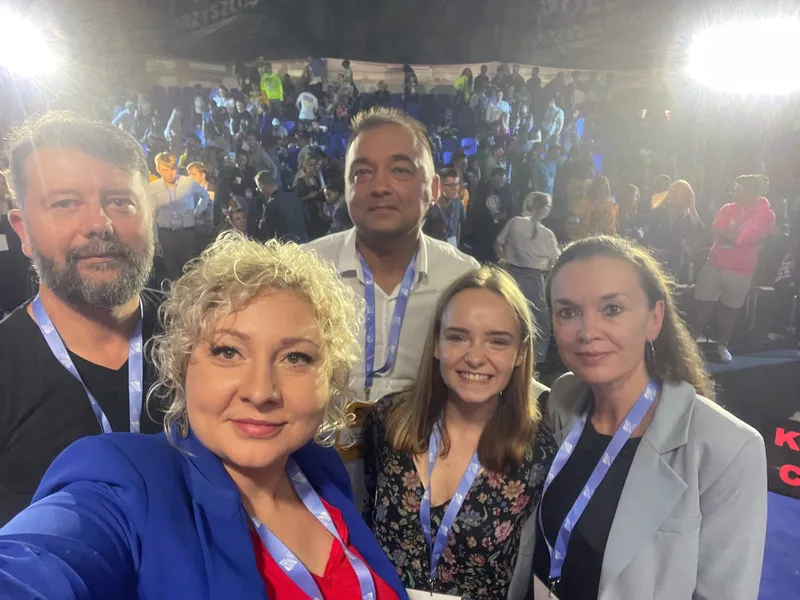
Five people sat on the stage:
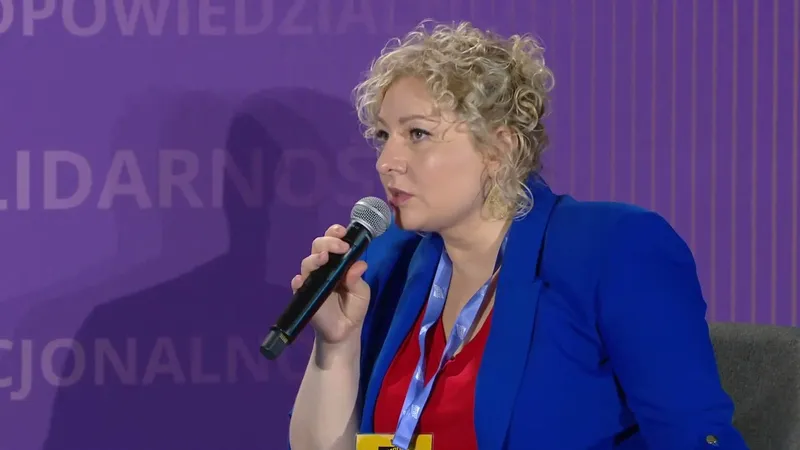
- Marta Golbik, an MP for the Civic Coalition, as the host;
- Dr. Aleksandra Lewandowska, Poland’s national consultant in child and adolescent psychiatry, who describes herself first of all as a practicing doctor;
- Dr. Mariusz Kaszubowski, a doctor of economics and director of the Provincial Psychiatric Hospital in Gdańsk (the Srebrzysko hospital), which has a ward for children and adolescents;
- Angelika Friedrich, then a 21-year-old psychology student and founder of Nastoletni Azyl (“Teenage Asylum”), who explains to teenagers what to do in a crisis and to parents how to understand a teenager;
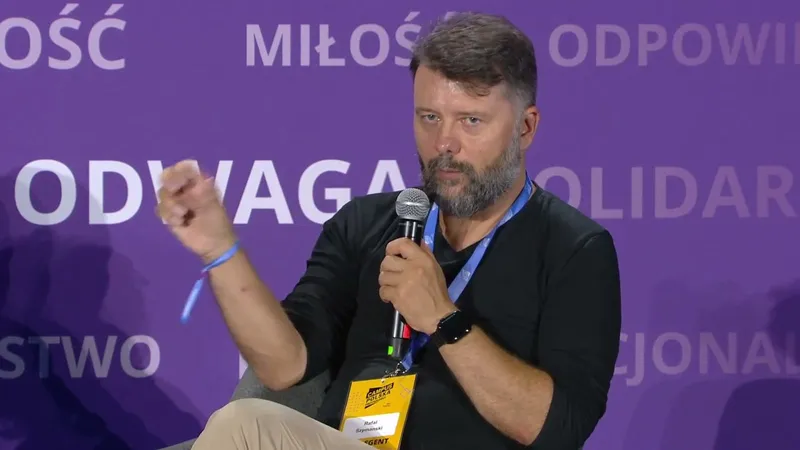
- me, as a parent and an “expert by experience” on the psychiatry committee at the Office of the Commissioner for Human Rights.
Marta Golbik introduced me as the father of a non-binary child, one of the people portrayed in Janusz Schwertner’s book “Szramy” (“Scars”), and as an “investigator” who checks why the system doesn’t work. There is something to it, because the day before, right after I arrived, I was telling everyone why the reform wasn’t working.
An important note: the numbers and opinions in the part about the debate come from August 2022. I report them as they were said. Current data is at the end, in the section on what has changed.
The full recording (in Polish) is on YouTube:

My story: from “teenage disobedience” to the hospital
Marta Golbik started with me and asked me to describe what I had to face. So I did.
My child was 12. We were divorced and I was a Sunday father. Their mother called: a huge row, a wrecked room, I was to come over and deal with it. What did I think? That this was a teenager being disobedient. It turned out to be the beginning of something much more serious: paranoid anxiety states, self-harm and an eating disorder.
We drove to the psychiatric hospital in Józefów near Warsaw for an ordinary appointment, because that was where the doctor happened to see patients. After 15 minutes the doctor said my child was staying. They stayed for half a year. In that hospital they made their first suicide attempt, which the staff did not notice for many hours. Then the hospital discharged us, having decided it would not deal with a child like that, and we ended up at home on our own, with no idea what to do.
That is where my anger came from (on stage I used a much stronger word). This was not the deal.
Then came a long fight for the right diagnosis. For five years my child was treated for depression they did not have, because they have a different illness, and their being non-binary was treated as a symptom of mental illness. How are things now? In August 2022 I could say that they had finished high school, were at university, had a good diagnosis and were doing quite well. It can be done, but only because we fought for therapy all the time and did not stop at medication (medication matters too, and if a doctor prescribes it, it should be taken).
Around that time I started a blog about teenage depression, “Porcelanowe Aniołki” (“Porcelain Angels”), and became a social activist, although that was not my choice. It is hard to say “my child is doing fine now, so I’ll move on to something else” when there is so much to do in child and adolescent psychiatry.
I also described what happened after my TEDx talk (“Depression is the kidnapper of our children”). People started writing: “we have the same problem at home”. Or: “I showed it to my mum and she finally agreed that we should go to a psychologist”. Because it is often children who ask for a psychologist, and parents who answer that they are making things up.
Why do parents react like that? Because when a child attempts suicide, the first thought of everyone around is that the parents must have been monsters. And the parent in that situation is alone and does not know what to do, because nobody ever taught them. That is why we asked the Patient Ombudsman for a list of places a parent can turn to, handed over when the child is discharged from hospital. The list has 300–400 entries. It is not complete (it left out organizations helping LGBT children, “just because”), but it is better than nothing.
Should you be afraid of a psychiatric hospital?
Marta Golbik put this question to Dr. Aleksandra Lewandowska. Most of us know psychiatric hospitals from “One Flew Over the Cuckoo’s Nest”: restraints and people stripped of their rights. What is it really like?
Dr. Lewandowska answered that the fear comes from stigma, and that a child psychiatrist is just like any other specialist. The earlier a parent or a teacher notices the symptoms and the child gets help, the better the chance that treatment will work.
She quoted the numbers that everyone working on the issue knew at the time:
- suicide attempts by children and adolescents in Poland rose by 77% in 2021 compared with 2020;
- according to a UNICEF report, 9 million adolescents aged 10–19 in Europe live with a mental disorder (on stage the figure was “over 10 million”, the report says 9), and more than half of those disorders are anxiety and depression;
- the same report puts the annual loss of human capital at over 50 billion euros (the report itself: 57.6 billion US dollars).
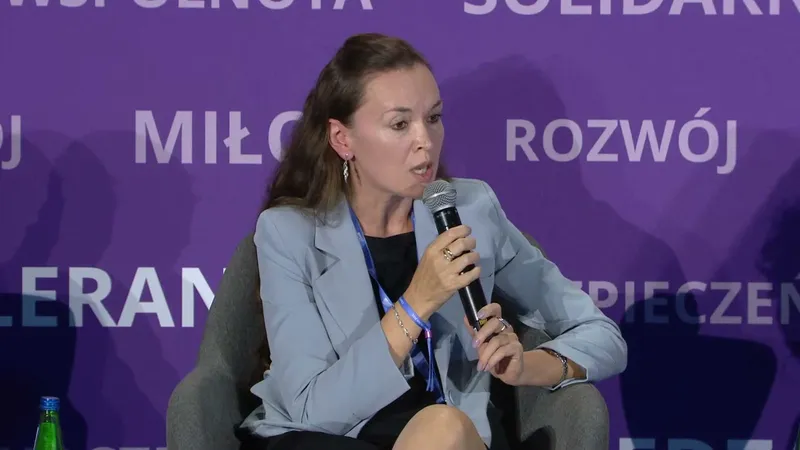
More important than the numbers, for me, was one sentence: the psychiatrist is the tip of the iceberg. Underneath are the psychologist, the psychotherapist and the community therapist, and those are the people to see first. That is what Poland’s reform is about: help should be as close to home and as early as possible, and only then, depending on what is needed, a day ward, a psychiatrist or an inpatient ward. Today it works the other way round, with overloaded emergency rooms and hospital wards. Dr. Lewandowska called it an inverted triangle.
On top of that come organizational standards, meant to make the offer uniform, so that a patient does not get something different in every clinic and on every ward. She has worked in the profession for 18 years and, by her own count, after the pandemic the number of children coming to facilities with a National Health Fund contract rose by nearly 50%, and the number of adolescents by nearly 60%.
What to do when a classmate is in crisis
Angelika Friedrich spoke to her peers, and spoke from experience: she goes to psychotherapy and to a psychiatrist herself. Not only because of symptoms. She said therapy helps her grow and find her strengths.
How do you know that something is wrong with someone in your class? You can usually see it, because you sit at the same desk. You can see wounds on a wrist, you can see what that person posts online. Angelika talked about her Tumblr from her teenage years: she shared her problems there with people who had similar ones, and together they motivated each other to lose more kilograms. That kind of “support” does harm.
So what should you do? Her advice is one question: how are you feeling, and do you need anything from me? Often that person knows what they need, and it can be something simple, like going to the school counselor together. In her case a friend talked to a teacher, and the teacher found a safe room and time for a conversation. Teachers are not psychotherapists, but together with the school counselor and the school psychologist they can find a place where help is available.
And what if I am the one who feels bad? Don’t wonder whether your problem is “big enough”. Anyone can go to a psychotherapist, and suffering you do nothing about keeps growing.
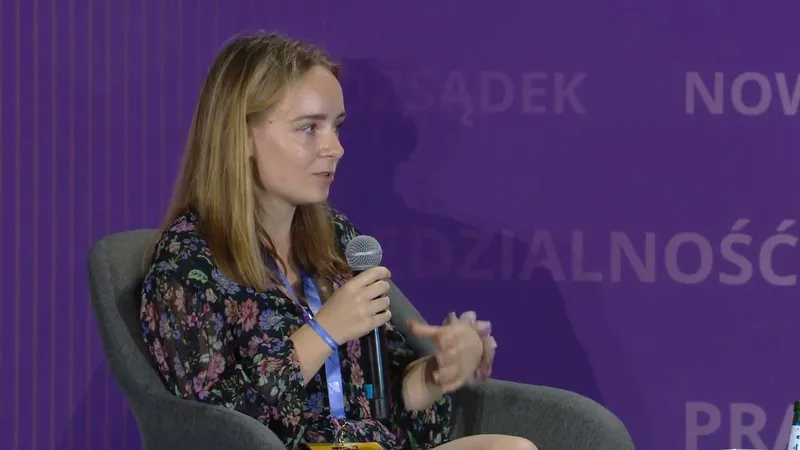
“I think it’s a kind of superpower. If we have it in us to ask another person: how are you feeling, what do you actually need from me.”
Angelika Friedrich
A 46-bed ward with 60 children in it
Mariusz Kaszubowski described what it looks like from the hospital’s side. The psychiatric ward for children and adolescents in Gdańsk has 46 places and is always full, and sometimes there are 60 children on it. Almost all of them are there after a suicide attempt or with suicidal thoughts. He called his team heroes on the front line.
What is the hardest part? The moment when a child is brought in after a suicide attempt and there is no room on the ward. There is nowhere to send them either, because the Gdańsk hospital then looks for beds in Szczecin, Kraków and Warsaw, and it is the same there. Every morning starts with counting how many extra beds can still be squeezed in.
Why is it like this? The director gave two reasons. There are few specialists, and training one takes at least 10 years (6 years of medical school and 4 years of specialty training). And the second reason?
“90%, really 90% of the hospitalizations we have on the inpatient ward could be avoided if the outpatient support system worked effectively.”
Mariusz Kaszubowski
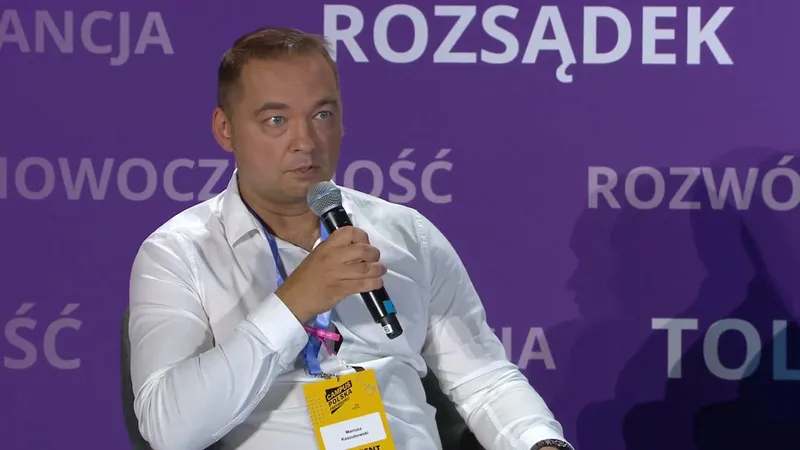
How does that work in a parent’s life? I can see that something is wrong with my child. The wait for a clinic is several months and help is needed now, so I drive to the emergency room. I expect the doctor to prescribe a pill, and the doctor keeps the child in hospital. That is what our 15 minutes in Józefów looked like.
Then the child leaves with a recommendation for a clinic, a day ward or psychotherapy, none of which is accessible, and comes back to the hospital. The director called these rehospitalizations: the same children, the same problems, round and round. He added the pandemic and the war in Ukraine, because a parent’s lost job, broken marriage or addiction hits the child straight away.
He left the audience with one sentence to remember: psychiatry is not a cost, it is an investment. According to WHO calculations, every dollar spent on mental health returns four dollars.
Questions from the audience: environment, municipality, school
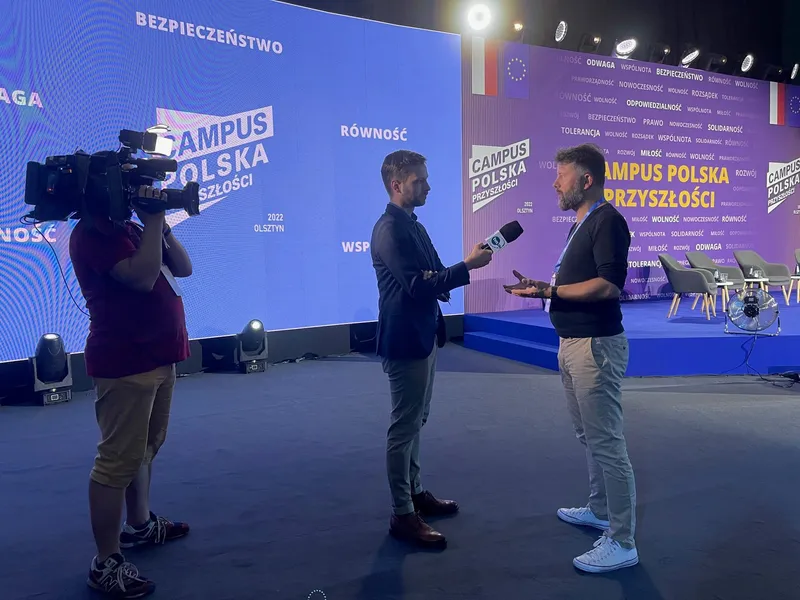
We gave half of the time to the audience. The questions were about what can be done here and now.
Will a child recover if they go back to the same environment?
That was asked by Oliwia, a medical student from Warsaw. Mariusz Kaszubowski answered that without support from other institutions, including family courts and social services, a young person is left alone, and the hospital sees the results. Dr. Lewandowska described how it is supposed to work after the reform: the ward hands the patient over to the community center closest to home, and that center works with the school, social services and probation officers.
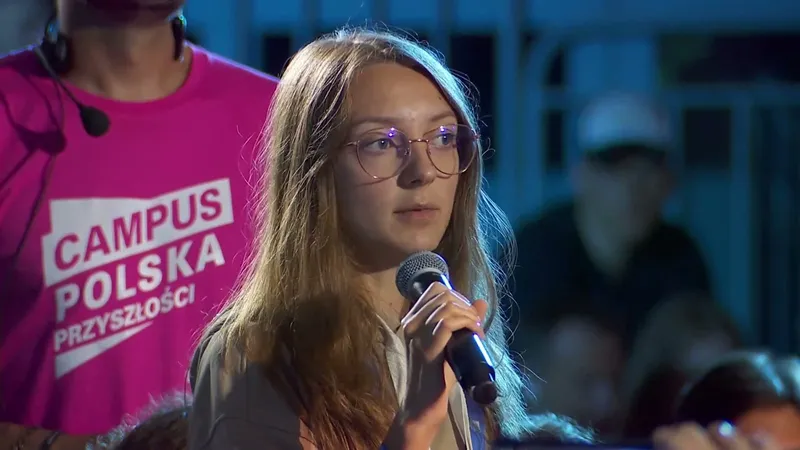
Oliwia also asked whether psychiatry is the only field of medicine where diagnosis is based on an interview alone. It isn’t. There is imaging, there are biomarkers, and the starting point is ruling out other causes, because many pediatric illnesses produce symptoms that people around the child immediately take for a mental disorder.
What can a municipality do?
This question came from a councilor in a mixed urban and rural municipality of 20,000 people in West Pomerania. He said that since the pandemic the psychotherapists in his municipality have been swamped with patients, and that in the counties which run hospitals people think about closing wards more often than opening them, because wards make a loss.
Dr. Lewandowska advised starting with cooperation with community care centers and gave the example of Łódź, where health care, education and social services sit at one table. Without those centers, she said, she would be afraid to think where we would be today.
I said the same “in non-medical words”, because the councilor was asking about things to do right away. In July 2022 the National Health Fund changed its settlement rules: a first-level center gets a lump sum for staying available, twenty-something thousand złoty a month, if it delivers a quota of 385 hours. A small team of two full-time posts can already afford that. For a municipality this can be the amount that makes it possible to open such a team, and every such team, together with the school and the teacher, takes off pressure before a case reaches the hospital.
What doesn’t school teach?
Natalia from Jarocin said that textbooks do have a chapter on “mental health hygiene”. It usually sits at the very end and is covered in summer, when neither the teacher nor the student wants anything more to do with school. When she met people with mental illness herself, she didn’t know how to talk to them, and she learned from social media.
Angelika Friedrich answered that she dreams of compulsory classes where we learn to handle our own emotions. As a teenager she didn’t know who to go to. If the school had told her that the counselor’s office is not only for children who are being punished, she would have got help sooner.
Marta Golbik added a number: only half of the schools in Poland have a psychologist.
What a visit costs and how much the hospital is short
Hubert said what many parents think: a private visit to a psychiatrist costs 200–300 złoty, many people can’t afford it, and the National Health Fund is often no solution at all. I threw in a price I knew from Warsaw: 750 złoty for 30 minutes, after a child’s suicide attempt.
What did the politicians say? Marta Golbik answered that the share of psychiatry money that goes to child and adolescent psychiatry is a fraction of what is needed. I added a figure: less than 1.2%. Her conclusion was simple: until there is money, and awareness among the people who distribute it, the problem will stay.
Mariusz Kaszubowski added that money is a necessary condition but not a sufficient one, because the number of specialists won’t double from one year to the next. He told the story of a father who brought his daughter to the emergency room after a suicide attempt. A complete family, nothing pathological in the background, and the parents had not noticed the suicidal thoughts. How do you tell a sentence thrown out in anger from a real threat? That is what parents and teachers need to be taught. About looking for answers online he said briefly that “uncle Google” doesn’t always answer well.
The amounts came after a question from Magdalena, a former Srebrzysko patient, who asked the director how much his hospital was short. In 2020 and 2021 the ward for children and adolescents made a loss of nearly 2.5 million złoty. Since July 2022 the hospital has had the third reference level and higher funding, but also new standards, so the costs were still being calculated. Rates in commercial clinics were two to three times higher than in public ones. Even so, the hospital was then building an outdoor gym, a sports hall and therapy rooms, because children after suicide attempts need more than a pill: care, school and afternoon activities.
What to do when parents refuse therapy
The most interesting moment of the debate began with a question from Oskar from Łódź, who ran a campaign on preventing mental illness. What should a young person do when they see the symptoms in themselves and their parents refuse treatment or psychotherapy? Shouldn’t it work the way it does in the West?
I answered as a parent and, as I announced myself, a little against logic. In my view, letting a child decide about their own therapy alone is not a good idea (I had checked this with a doctor beforehand). Why? Because in an ideal world therapy involves the parents, the school and the peers. If a young person says they have a problem and the parents are strongly against, it means the parents should go through therapy of their own as well. It could be solved by law, but education would be better.
And what can be done today, before anyone changes the law? Find another adult you trust: a teacher, an uncle, an aunt, a friend’s parent. Let them put pressure on the parents. I know it works.
Dr. Lewandowska added the legal position: without a parent’s consent help cannot be given, and after the age of 16 the consent of both the parent and the patient is needed. But if a young person comes alone, it is the therapist’s or doctor’s job to deal with their problem and draw in the adults they live with.
And here Marta Golbik said that she and Angelika see it differently. There isn’t always an adult who will react, and a sixteen-year-old today is a mature person. She revealed that they were working on a bill that would let people over 16 see a psychologist for a consultation without parental consent. Angelika made it precise: this is not about therapy behind the parents’ backs, but about, say, three consultations, with the psychologist and the teenager inviting the parent to the third. The first step is to be the child’s.
What happened to that bill is described below.
The last questions: genes, suicides and specialty training places
At the end three questions came at once.
Julia, who comes from Ukraine and lives in Gdynia, asked about children with genetic disorders. Dr. Lewandowska answered that some of these patients and their families need psychiatric support and are entitled to exactly the same offer as everyone else.
Paulina from Silesia pointed out something that is rarely discussed. Her cousin graduated from medical school and wants to specialize in psychiatry, but there is one place, maybe two. So specialists are not fleeing to the private sector, they can’t get trained in the first place. Director Kaszubowski explained the mechanism: the number of residency places depends on the number of specialists in a hospital. In adult psychiatry one specialist can supervise three residents; in child psychiatry an exception was made and it can be four. That is still not many.
Wiktor asked what to do to change the suicide statistics, given that more people in Poland die this way than on the roads. Dr. Lewandowska treated this question as a summary of the whole debate and answered with three things: listen to young people, cooperate across institutions, and pay attention to the other person.
Marta Golbik closed the debate with the sentence Angelika had been repeating for the whole hour: sensitivity is not weakness, and the question “how are you feeling?” can save someone’s life.
What has changed after four years
I checked what happened to the things we talked about in Olsztyn. This is the state of play at the beginning of October 2026.
I’ll start with the argument on stage. The bill Marta Golbik and Angelika Friedrich were working on did get written. The draft was presented on October 10, 2024 together with the Ombudsperson for Children under the slogan “Don’t let us die”, and Angelika of Nastoletni Azyl was among its authors. The Sejm passed the act on June 25, 2025: a patient who has turned 13 was to be able to see a psychologist or psychotherapist on their own in a facility with a National Health Fund contract, with the parent informed within seven days.
Does it work? No. In August 2025 President Andrzej Duda, just before the end of his term, sent the act to the Constitutional Tribunal, and there it got stuck. A door is left open by the act on the profession of psychologist of January 23, 2026: a minor in a crisis or after trauma will get a psychologist’s help without parental consent, to the extent necessary for their welfare. That provision takes effect only two years and three months after publication, which means May 2028. So the advice I gave Oskar in 2022 (find another adult you trust) is unfortunately still valid.
In Srebrzysko the ward still has 46 places, only there are more children. In July 2025 the hospital reported that there are often 70–80 patients on it, not 60 as in 2022. The good news is that the hospital received over 44 million złoty from the Medical Fund for a Psychiatric Care Center for Children and Adolescents: four floors, 80 beds, a school and a sports hall, to be completed by 2029.
And the 90% of hospitalizations that could be avoided? The Supreme Audit Office, in its report of September 2024, described the same thing with different numbers:
- the share of children admitted to wards as emergencies stayed above 70%;
- the waiting list for mental health clinics grew from almost 10,000 people in 2020 to just under 20,000 in the first quarter of 2023;
- the number of services rose from 1.8 million to 3.8 million between 2020 and 2022, so the system does twice as much and still can’t keep up.
There is more money. According to the Ministry of Health, National Health Fund spending on child and adolescent psychiatry rose from 258.7 million złoty in 2019 to 737.7 million in 2022, and the plan for 2023 exceeded one billion.
There are more specialists too. The Ministry of Health told the Sejm in June 2026 that there were 374 child and adolescent psychiatrists in 2020 and 603 in 2025, and 210 and 452 doctors in specialty training respectively. And the training places Paulina asked about? Here the Supreme Audit Office found something I didn’t expect: in individual recruitment rounds as many as 85% of residency places went unfilled.
The biggest change happened in schools. A few days after our debate, on September 1, 2022, staffing standards for school specialists came into force. According to Ministry of Education data from June 2026 there are 15,527 full-time school psychologist posts instead of 4,788 in September 2021, and 88% of schools employ a psychologist. In September 2021 it was 28.3%, even less than the “half” Marta Golbik mentioned.
Angelika’s dream of lessons in handling emotions has partly come true as well. From the 2026/2027 school year health education is a compulsory subject in grades 4–8 and for two years in secondary schools, and mental health is one of the compulsory sections. Natalia from Jarocin would no longer have to look for that chapter at the end of the textbook.
The number Dr. Lewandowska started with looks worst. The 77% rise meant 1,496 suicide attempts by children and teenagers in 2021. Then came 1,936 in 2022, 1,994 in 2023 and 2,054 in 2024, and in 2025 the police recorded 1,925 attempts and 161 deaths in the 7–18 age group. It is the first drop in years, but still far from the pre-pandemic level.
And the people from the stage? Dr. Aleksandra Lewandowska is still the national consultant. Marta Golbik has chaired the Sejm’s Health Committee since June 26, 2024. Angelika Friedrich went from a girl answering teenagers’ messages to a co-author of an act of parliament.
You can read more about what I do in this area on my social activities page, in the Campus Polska Przyszłości portfolio entry and in the posts about other debates: Child Psychiatry in Poland: Lessons from the Debate at the Economic Forum in Karpacz, Child and Youth Mental Health: A Plan for Mazovia and How to Help a Child in a Mental Health Crisis: Lessons from the FDDS Debate.
Sources
Most of the sources are in Polish.
- Let’s stop being silent, let’s start shouting! Child and adolescent psychiatry in collapse, recording of the Campus Polska Przyszłości live stream, August 29, 2022
- Campus Polska Przyszłości 2022 program: description of the debate and its participants, Campus Polska Przyszłości
- The State of the World’s Children 2021. On My Mind: regional brief Europe, UNICEF, October 2021
- Investing in treatment for depression and anxiety leads to fourfold return, World Health Organization, April 13, 2016
- “Don’t let us die!” Draft act on the protection of children’s and adolescents’ mental health, Ombudsperson for Children, October 10, 2024
- The Sejm has passed the act. Patients aged 13 and over will get a psychologist’s help without a guardian’s consent, Rynek Zdrowia, June 26, 2025
- Parents don’t want to hear it. A teenager will see a psychologist without their consent. The president has signed, Rynek Zdrowia, February 23, 2026
- A Psychiatric Care Center for Children and Adolescents will be built in Gdańsk, City of Gdańsk, July 25, 2025
- Child psychiatry needs fixing, Supreme Audit Office (NIK), September 10, 2024
- Child and adolescent psychiatry: how much does the National Health Fund spend on it?, Co w Zdrowiu, April 11, 2023
- Sejm: Ministry of Health on staffing in psychiatry: the number of specialists and residents is growing, Polityka Zdrowotna, June 19, 2026
- Psychological help and compulsory health education from September 1, 2026. The Ministry of Education explains the new rules, ePedagogika, August 19, 2026
- Health education will be a compulsory subject from September 1, Ministry of National Education
- Report on suicidal behavior among children and adolescents, 2012–2021, “Życie warte jest rozmowy” service, based on National Police Headquarters data
- Fewer suicides among children and adolescents, but more suicide attempts. What does it mean?, OKO.press, February 7, 2025
- Police release the latest data on suicide attempts by children and adolescents in 2025, Głos Nauczycielski, January 22, 2026
- Marta Golbik is the new chair of the Sejm’s Health Committee, Rynek Zdrowia, June 26, 2024
FAQ — child and adolescent psychiatry
Maybe we can do something together?
If you like what I write, maybe I can write something for you?