LinkedIn Is Putting Social Selling Index Behind Sales Navigator
Social Selling Index has been available only with a Sales Navigator licence since 8 September 2026: an account without one sees “You do not have access to SSI” instead of the score. My own score is 65 out of 100 against an industry average of 34, and it says nothing about how much I sell.

Social Selling Index in short
- On 7 September 2026 the SSI page on an account without a licence still loaded, with a red banner saying access “will be discontinued soon”, because “SSI is a Sales Navigator feature. Get Sales Navigator to retain access to SSI”.
- Social Selling Index measures behaviour, not results: none of the four components counts conversations or closed deals, so with 75 points you can sell nothing.
- You can push your SSI up with no effect on sales: I once reached 85 out of 100 and nothing changed, and on “Engage with insights” a single post with a few dozen thousand views lifted my score from 5 to 9.7 out of 25.
- Without SSI you lose one thing: the line on the “People in your industry” card telling you which industry LinkedIn’s algorithm has assigned you to, and that assignment decides who LinkedIn shows your content to. The score itself is no loss.
- You can check which industry LinkedIn has assigned you to without SSI in two free ways: the suggested posts in your feed (click one and LinkedIn explains why it decided the content fits you) and the list of people who viewed your profile.
- Don't buy Sales Navigator just to keep SSI: Navigator earns its money through search, lead lists and alerts. Instead of SSI, track the sales conversations started from Sales Navigator, the replies to InMails and the conversion from invitations sent to invitations accepted.
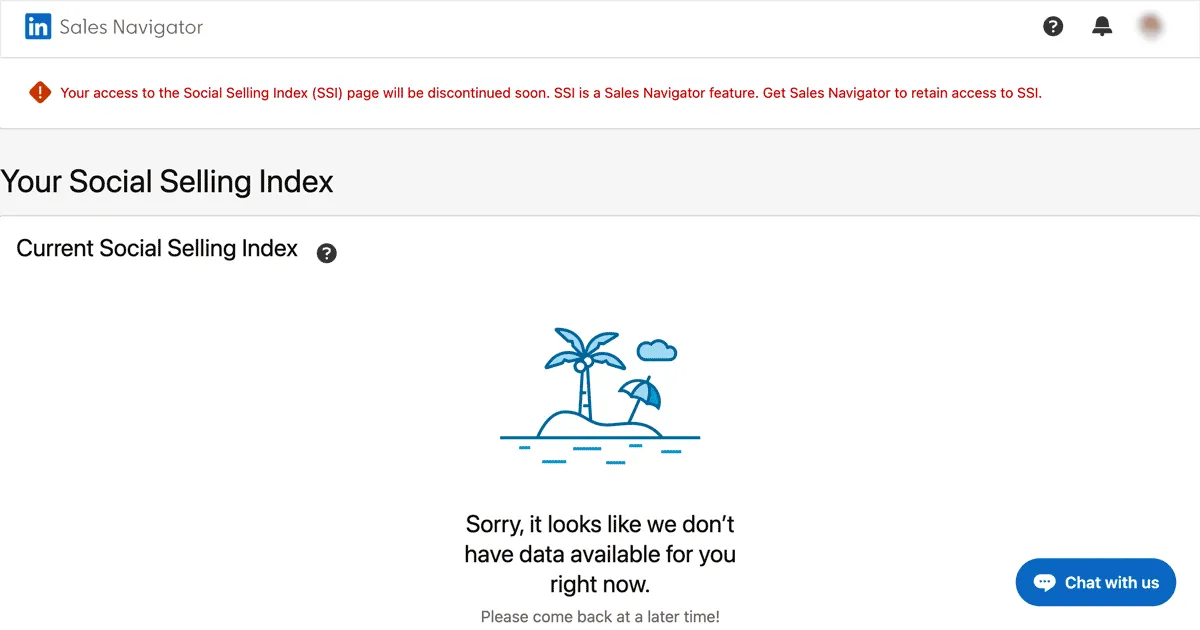
„Your access to the Social Selling Index (SSI) has been discontinued.” If you see this message, here is why. LinkedIn treats SSI as a Sales Navigator feature, so an account without a Sales Navigator licence now gets this message instead of the score.
I would not have noticed myself. I have had Sales Navigator since its beta, roughly since 2015, so SSI works for me the way it always did. It only clicked when I logged into an account without a licence.
What you see without a licence
Update, 25 September 2026
LinkedIn switched SSI off on 8 September 2026, a day after I published this article. The banner is gone. An account without a licence now gets only an empty state with the palm tree and one line: „You do not have access to SSI. Your access to the Social Selling Index (SSI) has been discontinued.” I have updated the article. Below is also what the page looked like on 7 September, when LinkedIn was only announcing the change.
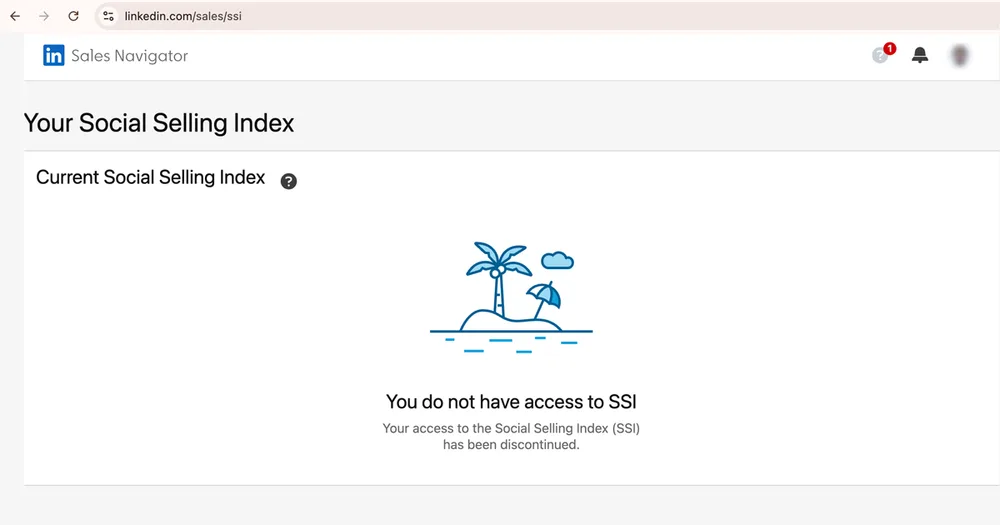
On 7 September the address linkedin.com/sales/ssi still worked. No redirect, no error, the page loaded, only there was a red banner across the top:
Your access to the Social Selling Index (SSI) page will be discontinued soon. SSI is a Sales Navigator feature. Get Sales Navigator to retain access to SSI.
Below, where the score should be, sat an empty state with a palm tree and the line „Sorry, it looks like we don’t have data available for you right now”.
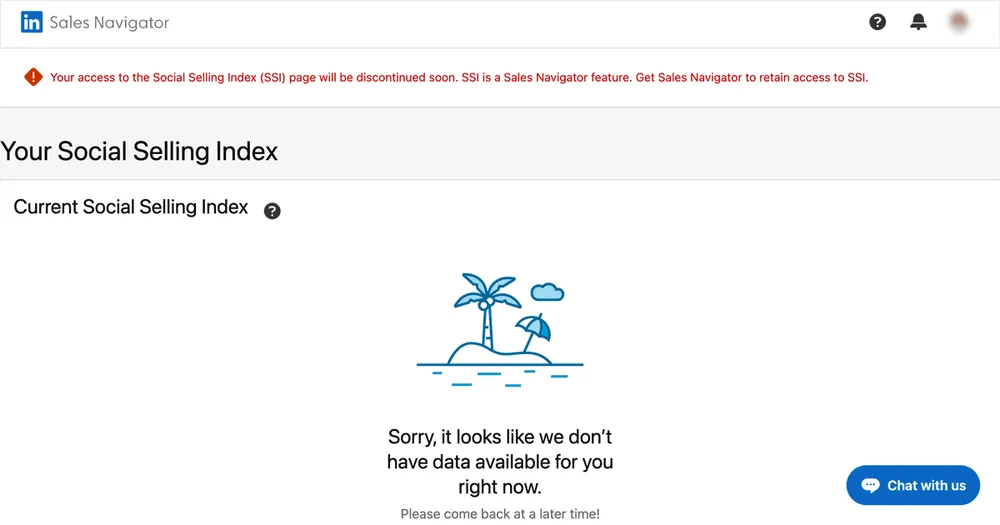
The second sentence of that banner is the one that matters. „SSI is a Sales Navigator feature. Get Sales Navigator to retain access to SSI”, which translated from LinkedIn into plain English means: this belongs to the paid product, you want to keep it, then buy it. They are not even pretending they are „improving” anything.
Did LinkedIn kill the public SSI page back then, as some people online were writing? Not yet. The banner was in the future tense („will be discontinued soon”) and the page still opened. A day later LinkedIn switched it off, so in my LinkedIn change register this entry has moved from announcement to rollout.
SSI now lives inside Sales Navigator. If you are paying for the licence, make it pay off: I train B2B sales teams to use Sales Navigator well.
What the same place looks like with a licence
On my account there is no warning at all. There is the full report: the overall score, the split into four components and three comparison cards.
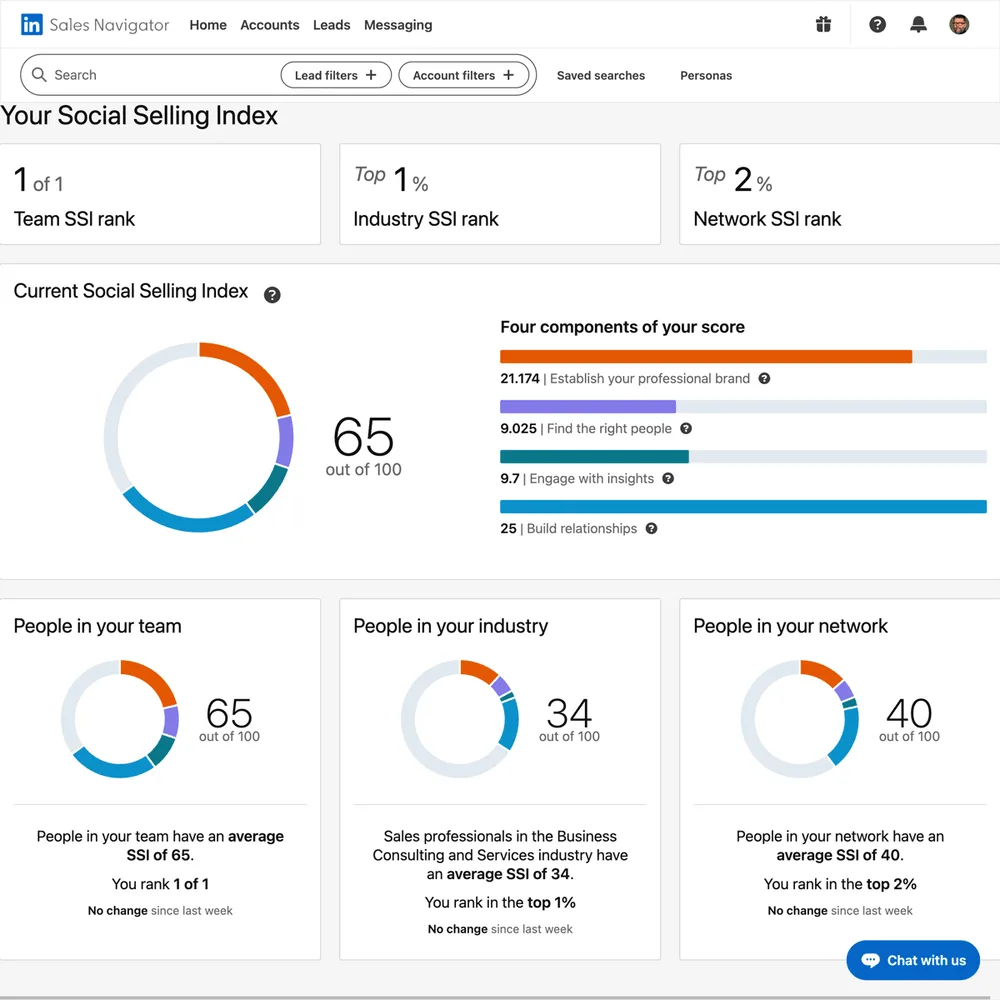
Looks respectable, doesn’t it? So let us take those numbers apart. If you are after a calm explanation of what the Social Selling Index measures, how to check it and how to improve it, I wrote a separate guide. Here I focus on what has just changed. LinkedIn trainers rarely show their own SSI, and mine is a good example of how little the number says.
My score: 65 out of 100. So what?
My LinkedIn SSI score is 65 out of 100. Back when I tried to push everything up, I got to 85. It changed nothing in my life or my sales. The average in my industry is 34, so I am in the top 1%, and in the top 2% of my own network. Sounds good, the ego swells, and so what.
Now the four components:
| Component | My score |
|---|---|
| Establish your professional brand | 21,174 |
| Find the right people | 9,025 |
| Engage with insights | 9,7 |
| Build relationships | 25 |
Third row: 9,7 out of a possible 25 for „engaging with insights”. From someone who makes a living from LinkedIn, has trained two hundred companies and publishes regularly. A week ago it was 5, because I published nothing over the summer, and then I posted once and it pulled in a few dozen thousand views. One post doubled the number.
Does that mean I engage badly? No. It means I do not do it the way LinkedIn wants to measure it, because I do not click through as much content as the platform would like and I do not publish daily to feed their algorithm. The score does not measure effectiveness, only how closely your behaviour matches what the platform expects of you.
That is why I have called it a vanity metric for years. What is missing from those four components? The result. No conversations, no closed deals. You can have 75 points and sell nothing, and you can have 50 and a full pipeline.
By the way, if anyone wants 25 out of 25 on the first component, the one about building a personal brand, which really means filling in your profile: if you are Polish and did not study at a well-known American or British university, you will not get there. I have filled in everything there is and I have 21,174 out of 25, because there is one field I cannot fill: which collegiate league you belonged to. Collegiate leagues and alumni associations are a good source of leads and networking, but neither I nor probably you will ever fill that in.
Who this score was really for
If it measures activity and not results, why did it exist? The answer is hanging on the first screenshot. SSI was free for years because it was meant to create a sense of lack: show a low number to someone who then decides they need a better tool. It has played its marketing role, so it goes back where it belonged from the start, into the paid product.
I have no complaints about LinkedIn (that is how every product with a free sample works), I have them about the industry that spent years using this score as proof of competence: on business cards, in training offers and in posts starting with „my SSI is 80, what’s yours?”. Dear LinkedIn trainers, you can finally drop that slide from your employee advocacy workshops.
What you actually lose without SSI
One thing. Not the score, but the line on the „People in your industry” card telling you which industry the algorithm has assigned you to. Mine reads: Sales professionals in the Business Consulting and Services industry.
Why does it matter? Because that same assignment decides who LinkedIn shows your content to. I got burned by it myself: for years I listed every university I had lectured at on my profile, until the algorithm reclassified me from consultant to academic lecturer. Reach collapsed and entirely the wrong people started clicking under my posts. I wrote about it at length in the piece on how the LinkedIn algorithm actually works.
That screenshot is also proof the fix worked, because today I am where I want to be. SSI was the simplest way to check it in one click, and without a licence that way is gone.
How to check your industry without SSI
Can it be done? It can, just less comfortably. Two methods, both free:
- Look at the suggested posts in your feed. LinkedIn labels them „Suggested post”, and when you click one it explains why it decided the content fits you. That is a literal description of your „tribe”. If you see topics from a completely different industry, the algorithm has put you somewhere you did not want to be.
- Go through the list of people who viewed your profile. If there is nobody from your market and from the companies you care about, something in your profile is sending the wrong signal.
Both methods are less clear-cut than one line in a report, but they have one advantage: they show the state today, not a number recalculated every so often.
What to replace SSI with
LinkedIn replaced SSI with a score called Sales Navigator Coach.
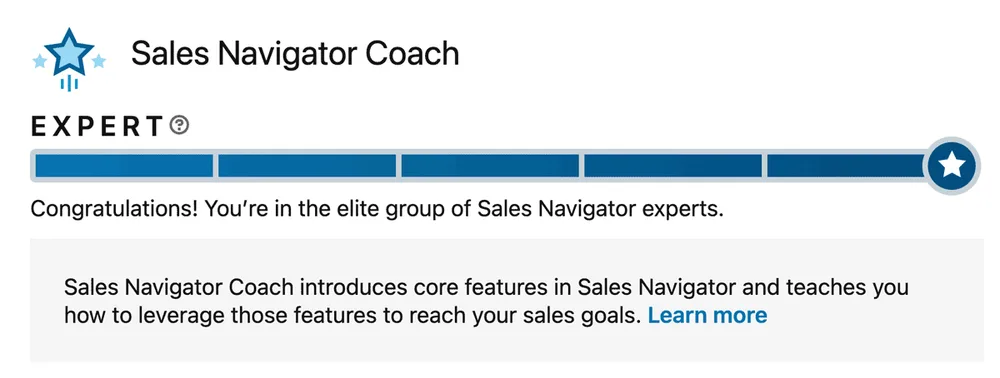
I replace it with KPIs closer to sales. The number of sales conversations started from Sales Navigator. The number of replies to InMails. The conversion from invitations sent to invitations accepted. Those translate into money, and LinkedIn will never count them for you.
If you want something closer to social media, look at Saves and Sends in your post analytics. They show that somebody found the content worth keeping or worth passing on under their own name, and that is a far stronger signal than a like, which costs nothing. I unpacked both in the piece on dark social analytics.
And should you buy Sales Navigator to keep access to SSI? No. A score I have criticised for years does not become valuable because you now have to pay for it. Navigator earns its money through search, lead lists and alerts, and SSI is a side dish in it, not an argument.
What follows from this
What changes in your daily work on LinkedIn? Not much. Because if you treated SSI seriously as a measure of success, you were measuring the wrong thing anyway.
Something else changes: LinkedIn stopped pretending. For years I explained why this score is not what people take it for. Now a screenshot with their own sentence does the job: SSI is a Sales Navigator feature.
If you want to work out what to measure in your case so that it has something to do with sales, book a consultation. We will go through your data and pick the numbers that mean something.
SSI now lives inside Sales Navigator. If you are paying for the licence, make it pay off: I train B2B sales teams to use Sales Navigator well.